
Photo Studio vs. Location Shoot: Which Is Right for Your Production?
One of the earliest decisions in planning a photo or video production is where to create it. This guide compares studio and location production so you can choose based on what your project actually requires.
One of the earliest decisions in planning a photo or video production is where to create it.
A studio and a location can produce very different results. A professional studio may provide greater control over the physical production environment. A location may provide context, architecture, atmosphere or authenticity that is difficult or unnecessary to recreate inside a studio.
Neither approach is universally better. The right question is not "Which option is better?" It is: "What does this production need from its environment?"
This guide compares the practical differences between studio and location production so photographers, videographers, businesses, brands, agencies, content creators and production teams can make that decision based on their specific project.
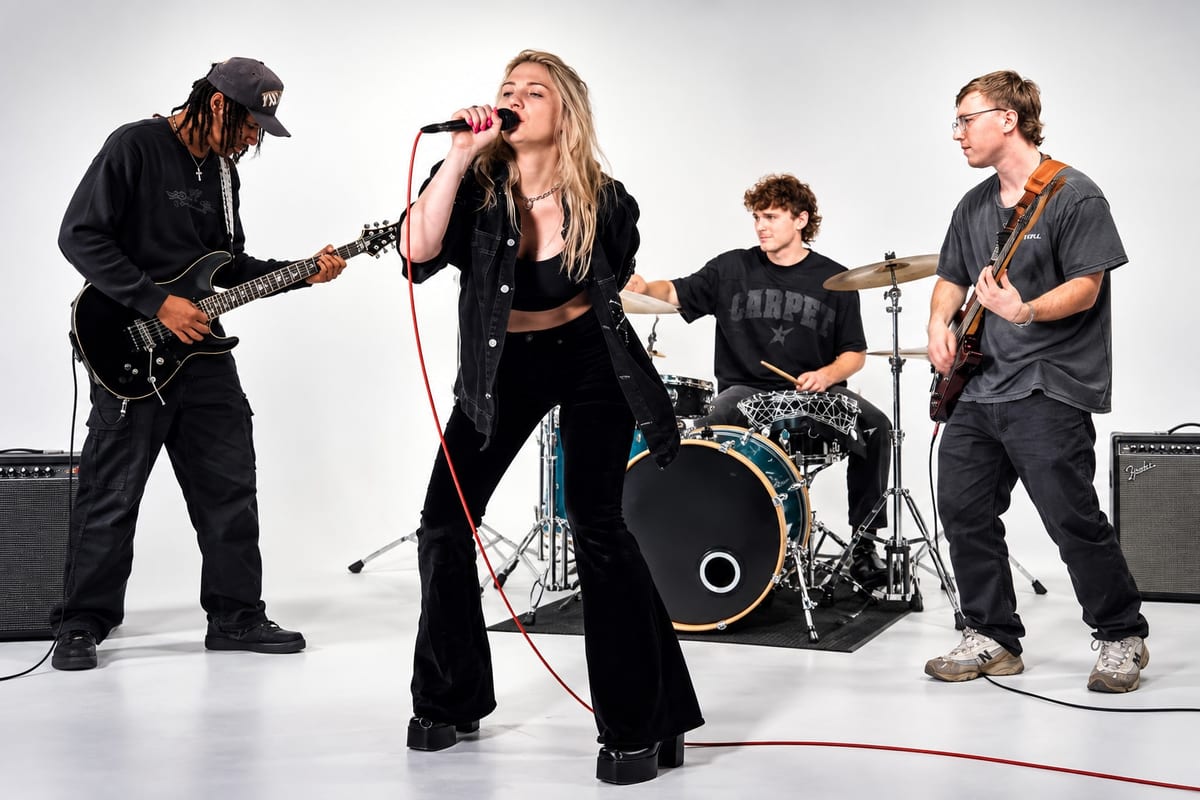
What Is a Studio Shoot?
A studio shoot takes place within a dedicated photography or production environment designed to provide space for cameras, lighting, subjects, products and other production needs.
Depending on the studio, features may include dedicated shooting areas, cyclorama walls, background systems, lighting infrastructure, preparation areas, changing areas and production amenities.
The primary advantage of a studio is greater control over more elements of the production environment. Lighting, background, temperature and access can often be planned around the project rather than worked around.
What Is a Location Shoot?
A location shoot is photography or video created in an environment outside a dedicated production studio.
Possible locations include offices, retail stores, restaurants, hotels, homes, warehouses, factories, event venues, outdoor environments and architectural locations.
Location photography can make the environment itself part of the story. For some productions, that context is not just useful, it is essential.
Start With the Creative Concept
Creative direction should come before choosing the environment.
The first question to ask: does the image need to communicate a specific place?
If yes, location may be important. A restaurant owner photographed inside the restaurant, a manufacturing company shown inside its facility, a real estate professional at a property, a retail brand inside its store, a hospitality business at its venue. In each of these cases, the environment carries meaning that a studio background cannot replicate.
Alternatively: does the project require a clean, controlled or adaptable visual environment where the subject, product or brand is the primary focus? A studio may make more sense. This can apply to professional portraits, headshots, product photography, personal branding, commercial photography, interviews, product demonstrations and content creation, depending on the project.
Neither list is absolute. The creative brief determines which environment serves the production.
Background Control
In a studio, backgrounds can be designed specifically for photography or video. This can make it easier to create a consistent visual environment across a full session or across multiple sessions.
On location, the environment itself becomes part of the composition. That can provide valuable context, but the production may have less control over background activity, furniture, signage, people, visual distractions and available camera angles.
Location characteristics are not inherently negative. They may be exactly what the production needs.
Using a Cyclorama Wall
One reason photographers and production teams choose a studio is access to specialized shooting environments such as a cyclorama wall.
Studio 33 has a 14' x 14' white cyclorama wall. A cyclorama, or cyc, uses a curved transition between the wall and floor that can create a more seamless-looking background from appropriate camera angles. A white cyc can provide a clean starting environment for portraits, full-body photography, product interaction, commercial photography, content creation and video, depending on the production.
A cyc does not automatically create a pure-white background. Its appearance depends on lighting, exposure, camera position, subject position, production choices and post-production. For a complete explanation of how a cyclorama works, see What Is a Cyclorama Wall? A Guide for Chicago Photographers.

Lighting Control
Lighting is one of the most significant practical differences between studio and location production.
In a dedicated studio, production lighting can be planned around the project. The team can set up, test and adjust without working around existing fixtures, windows or daylight conditions.
On location, a production may need to work with or modify existing lighting, windows, practical lights, daylight, mixed color temperatures and changing outdoor conditions. This is not a disadvantage by default. Natural or existing light may be an intentional part of the creative direction. The decision depends on the desired result.
Using RGB Lighting in a Studio
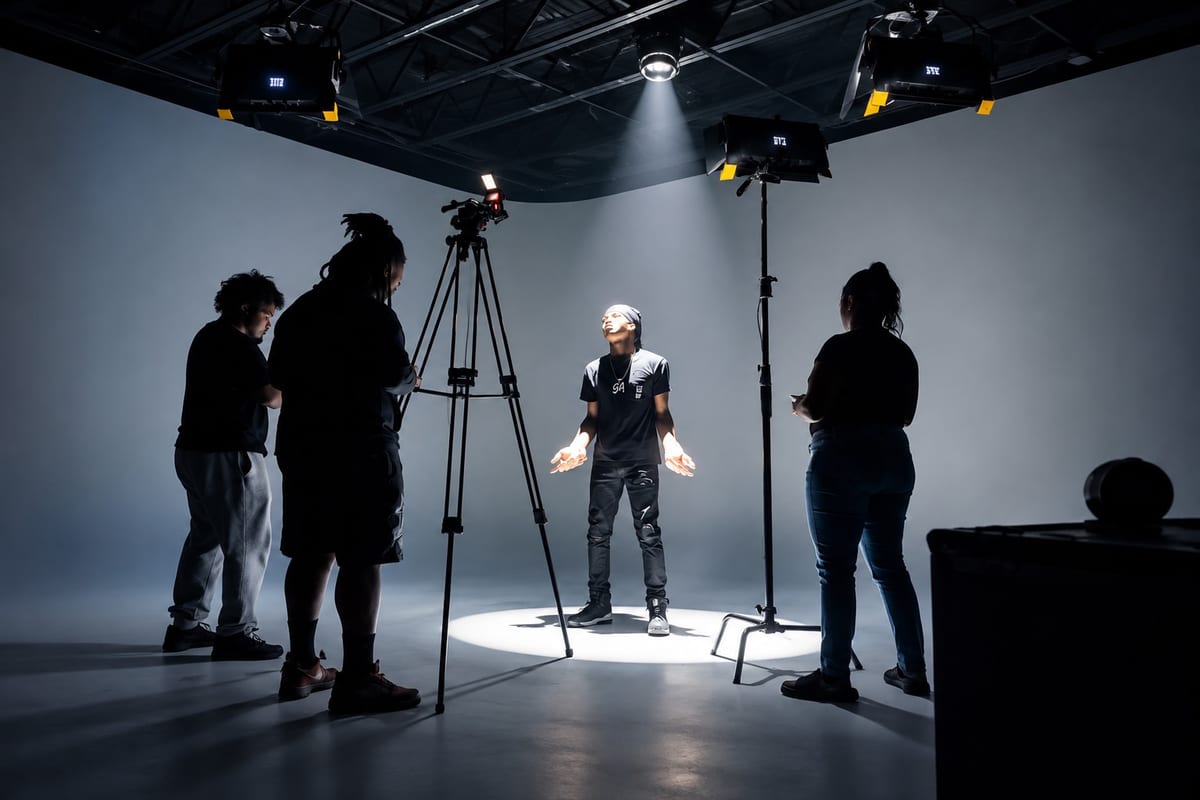
Studio 33 has three RGB panels positioned on the ceiling lighting grid and one additional panel on a C-stand. RGB lighting can potentially be used to introduce colored backgrounds, gradients, brand-inspired color, creative portraits and colored video environments, depending on the production.
The final appearance depends on lighting decisions, camera settings, wardrobe, background and other production variables. Exact color reproduction is not guaranteed. For creative examples, see RGB Lighting Ideas for Portrait Photography and the RGB lighting studio page.
Weather and Environmental Conditions
Outdoor location shoots may be affected by weather, temperature, wind, changing sunlight and precipitation. These variables can affect scheduling, production time and the final result.
Indoor locations can also introduce variables such as existing lighting, other occupants, operating hours and background activity.
A climate-controlled studio provides a more consistent indoor environment and can help reduce certain environmental variables. Studio 33 is climate-controlled. This does not eliminate every production variable, but it does remove weather as a factor.
Privacy and Production Control
Some productions benefit from a dedicated environment. This may be particularly useful when wardrobe changes are involved, products need to be organized, multiple takes are required, interviews are being recorded, clients are reviewing material or the production needs separation from normal business activity.
A location may still be appropriate if it can provide the required access and privacy. Not all locations are public or distracting.
Wardrobe and Preparation
Wardrobe-heavy productions may benefit from access to a separate preparation area.
Studio 33 has a private green room with two vanity stations, a large sofa, a wardrobe rack, a privacy divider and device chargers. This provides an area for wardrobe organization, changing, preparation and waiting between setups.
Wardrobe, makeup artists, hairstylists and stylists are not included with the rental. For guidance on planning wardrobe for a professional photoshoot, see What to Wear for a Professional Photoshoot.

Sound and Video Production
Video introduces additional considerations beyond photography.
A studio can provide a dedicated production environment, but that does not automatically mean the space is soundproof. Studio 33 is suitable for video production but should not be described as soundproof or acoustically treated. For interviews, talking-head video, dialogue and other spoken content, production teams should evaluate the environment for their specific audio requirements and arrange appropriate audio equipment.
A location may provide useful environmental context for video, but teams should similarly evaluate sound conditions before production.
For detailed guidance on planning a studio video production, see How to Plan a Professional Video Interview in a Studio and the video studio rental page.
Product Photography: Studio or Location?
Both approaches can work for product photography, and the right choice depends on the images required.
A studio may be useful when the product itself is the primary focus and the production benefits from controlled background and lighting decisions. A location may be useful when the product needs to be shown in a real-world environment or actual use context.
A project may even use both approaches: clean product images in a studio, product-in-use images on location. For a detailed planning guide, see How to Plan a Product Photography Shoot in a Professional Studio.
Professional Headshots: Studio or Location?
A studio can provide a consistent environment for professional portraits and headshots. A location can provide environmental context.
A traditional professional portrait may benefit from a clean background. An environmental portrait may intentionally show an office, workplace, facility or professional environment. The correct choice depends on how the photograph will be used and what the subject wants to communicate.
Personal Branding Photography: Studio or Location?
Personal branding can work well with either approach.
A studio can provide several controlled visual directions through composition, wardrobe, lighting, background and RGB color. A location can provide environmental context connected to the person's profession, business, personality, industry or story.
Some branding productions may intentionally combine studio and location photography across separate sessions. For a complete planning guide, see How to Plan a Personal Branding Photoshoot.
Commercial Photography: Studio or Location?
Commercial productions should make the decision based on the creative brief and required deliverables.
Useful questions include: Does the campaign require a specific environment? Does the product need to be photographed in context? Is background consistency important? Are multiple subjects involved? Are several visual concepts required? Is photography being combined with video? Does the production require a dedicated preparation area?
For a detailed pre-production guide, see How to Plan a Commercial Photoshoot.
Content Creation: Studio or Location?
Businesses and creators may need many different types of content, and the right environment depends on what the content is supposed to communicate.
A studio may support portraits, talking-head content, product demonstrations, educational video, brand photography, social content and b-roll. A location may support workplace content, environmental storytelling, real-world product use and behind-the-scenes business content.
For content planning resources, see 25 Photo and Video Content Ideas for Small Businesses, How to Plan a Content Creation Day and the content creator studio page.
Logistics Matter More Than People Expect
Creative considerations are only part of the decision. Production teams should also consider practical logistics such as location, travel, parking, equipment movement, products, wardrobe, number of people, preparation space and available production time.
Studio 33 provides free on-site parking for creators, clients and production teams.
What About Cost?
Studio rental creates a direct facility cost. Location shoots may also involve costs depending on the project, including location fees, permits, travel, parking and other production expenses.
Neither approach is necessarily more expensive. Costs depend on the project.
Studio 33 rental starts at $105 per hour, subject to current minimum booking requirements:
- Monday through Friday daytime: 2-hour minimum
- Evenings: 3-hour minimum
- Weekends: 3-hour minimum
For a detailed breakdown of studio rental costs, see How Much Does It Cost to Rent a Photo Studio in Chicago?
How Much Time Does a Studio Shoot Require?
There is no universal studio rental length. The production may need time for arrival, load-in, setup, lighting, preparation, photography, video, wardrobe changes, product changes, lighting changes, review, breakdown and load-out.
For guidance on planning realistic studio time, see How Long Should You Rent a Photo Studio?
Studio vs. Location Shoot: Quick Comparison
| Factor | Studio | Location |
|---|---|---|
| Background | Controlled, designed for production | Environment becomes the background |
| Lighting environment | Can be planned around the project | Works with or modifies existing light |
| Environmental context | Minimal or absent | Can be central to the image |
| Weather exposure | Not a factor (indoor) | May affect outdoor productions |
| Wardrobe preparation | Dedicated prep area possible | Depends on the location |
| Production privacy | Dedicated space | Depends on the location |
| Specialized backgrounds | Cyclorama, paper, colored light | Not typically available |
| Real-world environment | Not present | Present by definition |
| Photography | Supported | Supported |
| Video | Supported | Supported |
| Logistics | Centralized, predictable | Variable by location |
When a Studio May Make Sense
A studio may be appropriate when the production benefits from a dedicated shooting environment, controlled background, planned lighting, cyclorama wall, multiple visual setups, wardrobe preparation, product organization, photography and video in the same environment, or greater separation from unrelated activity.
These conditions do not automatically require a studio. They are factors to weigh against the project's actual needs.
When a Location May Make Sense
A location may be appropriate when the environment is part of the story, architecture is important, a real workplace must be shown, a product needs to be shown in actual context, outdoor imagery is required, moving the subject or product is impractical, or the creative brief specifically requires a real environment.
Sometimes the Answer Is Both
Some larger content libraries or campaigns may benefit from separate studio and location production.
A business might create professional portraits, clean product photography and talking-head video in a studio, then create workplace photography, product-in-use content and environmental portraits on location. This is one illustrative example, not a prescription.
Planning a Studio Production at Studio 33 Chicago
Studio 33 Chicago is located at 33 N. Addison Rd. in Addison, Illinois, serving photographers, videographers, creators, businesses, brands, agencies and production teams throughout Chicago and the surrounding western and northwestern suburbs.
Verified features include:
- 14' x 14' white cyclorama wall
- Professional ceiling lighting grid
- RGB lighting (three ceiling-grid panels and one C-stand panel)
- Private green room with two vanity stations, large sofa, wardrobe rack, privacy divider and device chargers
- High-speed Wi-Fi
- Climate-controlled studio
- Men's and women's restrooms
- Free on-site parking
- Sandbags and apple boxes
- Photography and video production capabilities
Studio rental starts at $105 per hour, subject to current minimum booking requirements. The rental provides the studio environment. Photographers, videographers, cameras, lenses, microphones, production crew, makeup, hair, styling, props, editing, retouching and finished photography or video are not included.

Studio or Location? Use This Decision Checklist
Before choosing an environment, work through these questions:
- Does the environment need to appear in the finished content?
- Do we need a clean or adaptable background?
- Do we need a cyclorama wall?
- How much control do we need over lighting?
- Are weather conditions relevant?
- Are multiple wardrobe changes planned?
- Do participants need a private preparation area?
- Are products involved?
- Do products need a real-world environment?
- Are we creating photography, video or both?
- Does video require spoken audio?
- How many visual setups are planned?
- How much equipment is involved?
- How many people are involved?
- What logistical requirements does the production have?
- How much time is required for setup, production and breakdown?
- What facility or location costs apply?
- Which environment best supports the actual creative brief?
There is no scoring system. The checklist is intended to reveal what the production actually requires.
Frequently Asked Questions About Studio vs. Location Photography
Is studio photography better than location photography?
No universal answer exists. Studio and location photography serve different creative and production needs. The appropriate choice depends on the project.
What are the advantages of shooting in a photo studio?
A professional studio may provide a dedicated production environment, background options, planned lighting, preparation space and other features depending on the facility. Confirm the specific studio's features before booking.
What are the advantages of shooting on location?
Location photography can provide real-world context, architecture, atmosphere and environments directly connected to the subject, product or business.
Should professional headshots be taken in a studio?
They can be, but they do not have to be. Studio headshots can provide a controlled visual environment, while environmental headshots can intentionally show a workplace or other relevant location.
Is a studio better for product photography?
It depends on the images required. A studio may work well for controlled product-focused imagery. A location may be appropriate when the product needs to be shown in use or in a specific environment.
Can you shoot video in a photography studio?
Some photography studios also support video production. Studio 33 provides an environment suitable for photography and video. Studio 33 should not be described as soundproof, and productions involving spoken audio should plan accordingly.
Does Studio 33 provide a photographer?
Studio 33 is primarily a professional studio rental space. Renters should arrange the photographers, videographers and other professionals required for their production.
Where is Studio 33 Chicago located?
Studio 33 Chicago is located at 33 N. Addison Rd. in Addison, Illinois, serving Chicago and the surrounding western and northwestern suburbs.
Choose the Environment That Supports the Production
The right question is not "Is a studio better than a location?" It is: "What does this production need?"
If the environment itself tells an important part of the story, a location may be the appropriate choice. If the project benefits from a dedicated production environment, controlled background, planned lighting, preparation space or specialized features such as a cyclorama wall, a professional studio may be appropriate. Some productions may benefit from both.
Before committing to a studio, it is worth evaluating the space carefully. What to Look for When Renting a Photo Studio in Chicago covers 10 practical factors to assess before booking. For a broader overview of the entire rental-planning process, the complete guide to renting a photo studio walks through every decision from deliverables to load-out.
For photographers, videographers, creators, businesses, brands, agencies and production teams considering a Chicago-area studio environment, explore Studio 33's photo studio rental, production studio rental, video studio rental, content creator studio, cyclorama wall, RGB lighting, green room, studio amenities and gallery pages to see whether the space fits the production.