
How to Plan a Personal Branding Photoshoot: A Complete Guide for Professionals and Creators
A personal branding photoshoot should produce more than one good profile picture. This guide walks through how to plan a session that creates a useful library of professional images for your website, social media, marketing, and more.
A personal branding photoshoot should produce more than one good profile picture.
Professionals today need photographs for a wide range of applications: websites, LinkedIn, Instagram, speaker profiles, email newsletters, press materials, blog articles, presentations, advertising, professional biographies, and marketing materials. Each of these uses may require a different composition, orientation, or visual approach.
A useful personal branding session begins by determining what photographs are actually needed before deciding on wardrobe, backgrounds, or anything else. Planning the production before arriving at the studio tends to produce a more focused session and a more complete set of images.
This is a practical guide to planning a personal branding photoshoot from the beginning.
What Is Personal Branding Photography?
Personal branding photography is a collection of professional images designed to visually represent an individual and their work across multiple communication and marketing channels.
Depending on the person and their needs, it can include traditional headshots, wider portraits, working images, lifestyle-style portraits, detail photographs, product interaction, branded imagery, horizontal images, vertical images, and social media content.
Not every personal branding session requires all of these. The appropriate scope depends on how the images will actually be used.
Personal Branding Photos vs. Traditional Headshots
A traditional headshot typically focuses on the person's face and upper body. It is a professional photograph designed to represent the individual in a professional context.
A personal branding session can expand that visual library to include different compositions, multiple wardrobe looks, different backgrounds, working photographs, props, products, wider portraits, and images designed for specific marketing uses.
Neither approach is inherently better. A person who only needs a professional profile photograph may only need a traditional headshot — for guidance on organizing a company headshot day, see How to Plan a Corporate Headshot Session in Chicago. Someone who regularly creates marketing content, publishes on social media, speaks at events, or runs a business may benefit from a broader image library.
Start With Where the Photos Will Be Used
This step should happen before selecting wardrobe or gathering visual inspiration.
Make a list of where you currently need photographs. Consider your website homepage, about page, LinkedIn profile, Instagram, Facebook, speaker biography, email newsletter, blog, press kit, sales materials, online advertising, and presentation slides.
Each use may require a different composition. A website header typically needs a horizontal image. A LinkedIn profile photograph is often square or vertical. A blog article might use a wider portrait with space for a headline. Identifying these needs before the shoot helps the photographer plan compositions that actually work for their intended purpose.
Build a Personal Branding Shot List
A shot list does not need to dictate every pose. Its purpose is to make sure important images are not forgotten during the session.
Possible categories might include a primary headshot, an alternate headshot, a waist-up portrait, a full-body portrait, a horizontal website image, a vertical social image, a square profile image, a working image, product interaction, prop interaction, images with negative space, and several expressions or moods.
Prioritize essential images before optional ideas. If time runs short, the most important photographs should already be captured.
Plan for Horizontal, Vertical and Square Images
A photograph that works beautifully as a vertical portrait may not work as a horizontal website banner. Orientation should be planned before the shoot, not treated as an editing problem afterward.
Horizontal: Website headers, banners, presentations, and some advertising.
Vertical: Social content, editorial layouts, stories, and portrait-oriented marketing.
Square: Profile photographs and certain social applications.
The photographer should know the intended uses before shooting so compositions can account for them. Capturing only tight vertical portraits and then needing a horizontal website image is a difficult situation to recover from without scheduling another session.
Don't Forget Negative Space for Text
Negative space is the open visual area in a photograph beside or around the subject. A marketing image may need this space for headlines, website copy, promotional offers, event information, graphics, or calls to action.
Photographing everything tightly around the subject can limit later design options. If any of the intended uses require text or graphics to appear alongside the photograph, identify those needs before the shoot so the photographer can plan compositions accordingly.
Decide What Your Personal Brand Should Look Like
Think about the visual characteristics you want the photographs to communicate. Possible directions might include professional, approachable, creative, technical, minimal, bold, casual, executive, colorful, or editorial.
The visual direction influences background, lighting, wardrobe, props, and composition. Arriving at the studio with a clear visual reference, whether that is example imagery, brand colors, or a simple mood board, helps the photographer understand the intended look before the session begins.
Plan Your Wardrobe Before the Session
Wardrobe changes can create visual variety without changing the entire production setup.
Think about the different contexts in which you appear professionally. Possible wardrobe categories could include formal professional, business casual, industry-specific, and more relaxed or creative. The appropriate choices depend on the intended visual style and where the images will be used.
Clothing should support the intended visual style and work with the chosen background and lighting. Wardrobe decisions are context-dependent rather than governed by universal rules. For a detailed guide to wardrobe planning before a professional session, see What to Wear for a Professional Photoshoot.
Coordinate Wardrobe Colors With the Background
Clothing and background should be considered together rather than separately.
A white cyclorama, neutral background, or colored RGB environment may interact differently with wardrobe colors. A dark outfit against a dark background may lose definition. A bright outfit against a bright background may create unwanted visual competition. Planning combinations before production day avoids discovering these conflicts during the session.
RGB lighting introduces additional color considerations. A background lit with a specific color may complement or clash with certain wardrobe choices depending on the combination.
Use Props With a Purpose
Props should help communicate something meaningful about the person or their work.
Examples might include a laptop, notebook, product, tools associated with a profession, books, creative equipment, or presentation materials. The question to ask is: "Does this object help explain who I am or what I do?" If not, it may not need to be included.
Props that have no connection to the person's work or professional identity tend to distract from the subject rather than add meaning.
Consider Products as Part of the Session
For entrepreneurs, founders, and product-based businesses, personal branding photographs may include interaction with the product.
Product preparation should happen before the shoot. Products should arrive organized and ready for photography. Discovering that a product needs cleaning, assembly, or additional preparation during paid studio time is a common and avoidable problem.
Choosing a Background for Personal Branding Photography
Background choice affects the overall visual character of the photographs.
White Cyclorama Wall
Studio 33 has a 14' x 14' white cyclorama wall. The curved transition between the vertical wall and the floor can create a clean, seamless appearance depending on lighting, composition, and camera position. A white environment can work for clean portraits, full-body images, product interaction, minimal branding photography, and content designed for flexible use across different applications.
For a more detailed explanation of how a cyclorama wall works, see What Is a Cyclorama Wall? A Guide for Chicago Photographers.
Colored Background With RGB Lighting
Colored light can change the visual character of a neutral studio environment. RGB lighting can potentially be used to reference brand colors, create visual contrast between subject and background, produce a more creative portrait, or create different looks within the same physical space.
Studio 33 has three RGB panels positioned on the ceiling lighting grid and one additional RGB panel on a C-stand. For additional creative lighting concepts, see RGB Lighting Ideas for Portrait Photography.
Environmental Photography
Some personal brands benefit from being photographed in an office, workplace, workshop, outdoor environment, or another location relevant to their work. A studio is not always the appropriate environment. When the physical setting is part of the story, photographing on location may make more creative sense.
Create Several Visual Looks Without Changing Locations
Different visual approaches can potentially be created inside the same studio by changing wardrobe, lighting, RGB color, camera framing, subject position, props, and products.
A clean white portrait may look completely different from a photograph using colored background lighting. The amount that can be accomplished depends on preparation, photographer workflow, and production complexity. Planning these variations before the session helps the photographer understand what is needed and allocate time accordingly.
Plan for Social Media Content
Personal branding photography is often used repeatedly rather than posted once.
Consider the different types of content you regularly publish: educational posts, announcements, promotional posts, blog links, quotes, events, speaking appearances, and professional updates. Different compositions give designers and content creators more flexibility when building around the photographs over time. For a broader look at the types of photo and video content a business or creator might plan, see 25 Photo and Video Content Ideas for Small Businesses.
Consider Adding Video to Your Branding Session
Some professionals may also need short introductions, expert commentary, website video, social clips, interview-style content, or educational video.
Because Studio 33 is designed for both photography and video production, the physical environment can support productions where both are intentionally planned. Photography and video equipment and professionals are not included as part of the studio rental. For a detailed guide to planning video content, see How to Create Professional Video Content for Your Business. If you are planning a broader session that combines multiple content types across a full production day, see How to Plan a Content Creation Day.
Use the Green Room to Organize Multiple Looks
Wardrobe-heavy personal branding sessions can benefit from a separate preparation space.
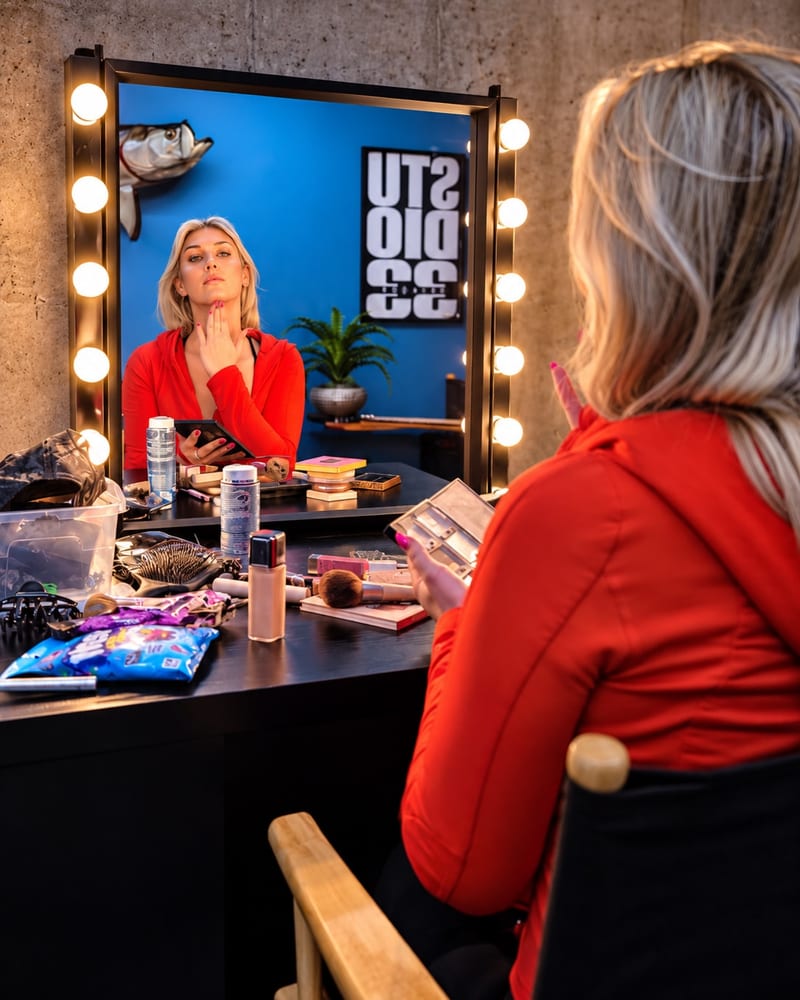
Studio 33 has a private green room with two vanity stations, a large sofa, a wardrobe rack, a privacy divider, and device chargers. The area can be used for wardrobe organization, preparation, and breaks away from the primary shooting area. Makeup artists, hairstylists, and wardrobe professionals are not included as part of the rental.
How Much Time Should You Plan for a Personal Branding Photoshoot?
There is no universal answer.
The amount of studio time depends on the number of wardrobe changes, number of backgrounds, lighting changes, shot list, props, products, whether photography and video are both planned, setup, and breakdown.
A simple portrait session may require less production time than a branding session involving several wardrobes, products, and lighting concepts. For broader guidance on preparing for a studio session, see How to Prepare for Your First Photo Studio Rental.
Prepare Everything Before Production Day
Prepare wardrobe, shoes, and accessories; products; props; a shot list; visual references; brand colors; required image orientations; website layouts if relevant; and social media requirements before arriving at the studio.
Production day is not the ideal time to discover that an essential product, outfit, or photograph was forgotten. The more organized the preparation, the more the session can focus on creating the images rather than solving problems.
Planning a Personal Branding Photoshoot at Studio 33 Chicago
Studio 33 Chicago is located at 33 N. Addison Rd. in Addison, Illinois. The studio serves photographers, professionals, entrepreneurs, content creators, brands, agencies, and production teams throughout Chicago and the surrounding western and northwestern suburbs.
The photo studio rental includes access to the following verified environment:
- 14' x 14' white cyclorama wall
- RGB lighting (three ceiling-grid panels and one C-stand panel)
- Professional ceiling lighting grid
- Private green room with two vanity stations, sofa, wardrobe rack, privacy divider, and device chargers
- High-speed Wi-Fi
- Climate-controlled studio
- Men's and women's restrooms
- Free on-site parking
- Sandbags and apple boxes
Studio rental starts at $105 per hour. Current minimum booking requirements are a 2-hour minimum for Monday through Friday daytime sessions and a 3-hour minimum for evenings and weekends. Check current booking information for pricing, availability, and any optional services or add-ons.
The studio rental rate does not include a photographer, cameras, styling, retouching, or finished photographs. A photographer or production team rents the studio and uses the environment for the production.
Personal Branding Photoshoot Checklist
Before the shoot:
- Define where the photographs will be used
- Identify the primary audience
- Create a shot list
- Determine horizontal, vertical, and square requirements
- Identify images requiring negative space
- Choose the visual direction
- Select wardrobe
- Coordinate wardrobe with background choices
- Prepare accessories
- Prepare products
- Choose meaningful props
- Gather visual references
- Decide whether RGB lighting is part of the concept
- Determine whether video content is needed
- Confirm photographer and production requirements
- Confirm studio reservation
- Allow time for setup and breakdown
- Pack everything before production day
Frequently Asked Questions About Personal Branding Photoshoots
What is a personal branding photoshoot?
A photography session designed to create a collection of professional images representing an individual and their work for websites, social media, marketing, professional profiles, and other communications.
What is the difference between a headshot and a personal branding photo?
A headshot generally focuses closely on the individual. Personal branding photography may include a broader collection of portraits, working images, products, props, wider compositions, and different visual styles designed for specific uses.
How many outfits should I bring to a branding photoshoot?
There is no universal number. The appropriate amount depends on the shot list, available production time, intended uses, and desired variety.
What should I bring to a personal branding photoshoot?
Possible items include wardrobe, accessories, products, meaningful props, visual references, and a shot list. Exact requirements depend on the concept and production plan.
Should personal branding photos be taken in a studio or on location?
Either can work. A studio provides a dedicated environment where background and lighting can be deliberately designed. A location can provide real-world context that may be important to the individual's work.
Can I create both photos and video during a branding session?
Potentially, yes, if the production is planned accordingly. Studio 33 is designed for both photography and video production. Photography and video equipment and professionals should not be assumed to be included with the studio rental.
Can Studio 33 be rented for personal branding photography?
Yes. Studio 33 is a professional photo and video rental studio that can provide an environment for personal branding productions. A photographer is not automatically included.
Where is Studio 33 Chicago located?
Studio 33 Chicago is located at 33 N. Addison Rd. in Addison, Illinois, serving Chicago and the surrounding western and northwestern suburbs.
Build the Shot List Before You Step in Front of the Camera
A successful personal branding photoshoot starts with understanding how the photographs will actually be used.
Instead of arriving with several outfits and hoping for variety, begin with where the images will appear, what compositions are needed, what messages the images should support, what wardrobe makes sense, what backgrounds fit the visual direction, which props or products are relevant, and whether photography, video, or both are needed.
Then build the production around those requirements.
For professionals, creators, and photographers looking for a dedicated Chicago-area studio environment, explore Studio 33's cyclorama wall, RGB lighting, green room, and current rental availability.