
The Complete Guide to Renting a Photo Studio in Chicago: What to Know Before Your Shoot
Renting a photo studio works better when the space is selected around the actual production. This guide walks photographers, videographers, businesses and creators through every planning decision before they book.
Renting a photo studio can initially sound straightforward.
Find a studio. Choose a date. Book a few hours. Bring a camera. Start shooting.
In practice, a professional studio rental works better when the space is selected around the actual production. A portrait session, product shoot, corporate headshot day, personal branding session, commercial campaign and video interview may all take place inside a professional studio, but they can require very different amounts of space, time, equipment and preparation.
The goal is not simply to find a photo studio. The goal is to find an environment that supports the production you actually need to complete.
This guide walks through the decisions involved in renting a professional studio so photographers, videographers, businesses, brands, agencies and content creators can make those decisions before they book.
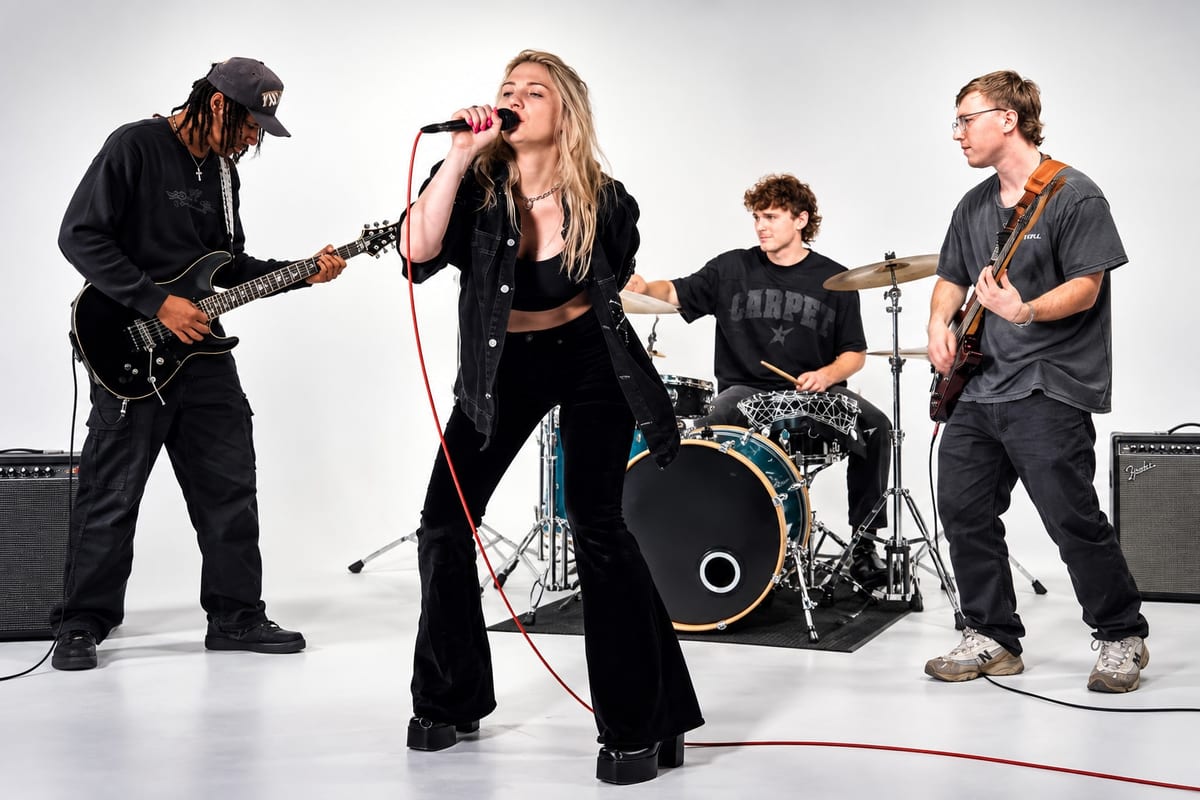
Step 1: Define What You're Creating
Start with the most important question: what are we actually creating?
Potential projects might include portraits, corporate headshots, executive portraits, personal branding photography, product photography, commercial photography, team photography, website photography, content creation, interviews, product demonstrations, corporate video, social media photography, social media video or branded content.
Production type affects almost every later decision. A single-person headshot session may have very different requirements from a product shoot or multi-person commercial production. Defining the project clearly before evaluating studios makes every subsequent decision easier.
Step 2: Identify the Final Deliverables
There is a meaningful difference between saying "we need professional photos" and having a specific deliverable list.
A specific list might include a website hero photograph, professional headshots, a horizontal team photograph, vertical branding portraits, product detail images, a talking-head video and b-roll. The second version provides a much clearer production starting point.
Deliverables can influence orientation, framing, background, number of setups, wardrobe, lighting, equipment and rental time. Identify where the content will be used. Potential uses include website, social media, advertising, company profiles, sales materials, presentations, press, recruiting and internal communications. For content planning ideas, see 25 Photo and Video Content Ideas for Small Businesses.
Step 3: Build a Shot List
A shot list converts broad goals into specific production requirements.
Separate must-have content from optional or creative content. This does not eliminate creativity. It helps ensure required deliverables are captured before time is spent exploring additional ideas.
A shot list is particularly useful for commercial photography, product photography, personal branding, corporate headshots, content creation and multi-person productions. For a detailed pre-production guide, see How to Plan a Commercial Photoshoot. For productions focused on building a full content library in a single session, see How to Plan a Content Creation Day.
Step 4: Decide Whether You Actually Need a Studio
A professional studio may be useful when a project benefits from dedicated shooting space, a controlled visual environment, planned lighting, background control, privacy, wardrobe preparation, product organization, multiple setups or photography and video capabilities.
A location may make more sense when the environment itself is an important part of the finished content. Examples include an office, restaurant, retail environment, factory, home, outdoor setting, architectural location or actual workplace.
Neither is universally better. For a balanced comparison of both approaches, see Photo Studio vs. Location Shoot: Which Is Right for Your Production?
Step 5: Evaluate the Actual Shooting Space
Square footage alone does not tell you whether a studio works for a specific production.
Production teams may need to consider usable shooting area, width, depth, camera-to-subject distance, background dimensions, ceiling environment, camera angles, space for equipment, space for products, number of people involved and number of setups.
Evaluate the physical space against your actual shot list. For a detailed breakdown of what to evaluate before booking, see 10 things to look for when renting a photo studio in Chicago.
Step 6: Understand the Background
Background requirements are one of the most important studio-selection considerations.
Different professional studios may offer different environments. General examples in the industry include cyclorama walls, seamless paper, fabric backdrops, constructed sets, textured walls, solid backgrounds and environmental areas. These are general industry examples and do not represent the inventory of any specific studio.
Studio 33 has a 14' x 14' white cyclorama wall. A cyclorama, often called a cyc, uses a curved transition between wall and floor that can create a more seamless-looking background from appropriate camera angles. A cyc may be used for appropriately planned photography and video.
A white cyc does not automatically photograph as pure white. Its appearance depends on lighting, exposure, camera settings, subject position, camera angle, production decisions and post-production. For a full explanation, see What Is a Cyclorama Wall? A Guide for Chicago Photographers.

Step 7: Plan the Lighting Environment
The physical background is only part of the visual result.
Lighting affects the subject, background, contrast, color, separation, mood and overall visual direction. Different productions may want bright neutral imagery, soft portraits, high-contrast imagery, colored backgrounds, brand-inspired color or dramatic lighting.
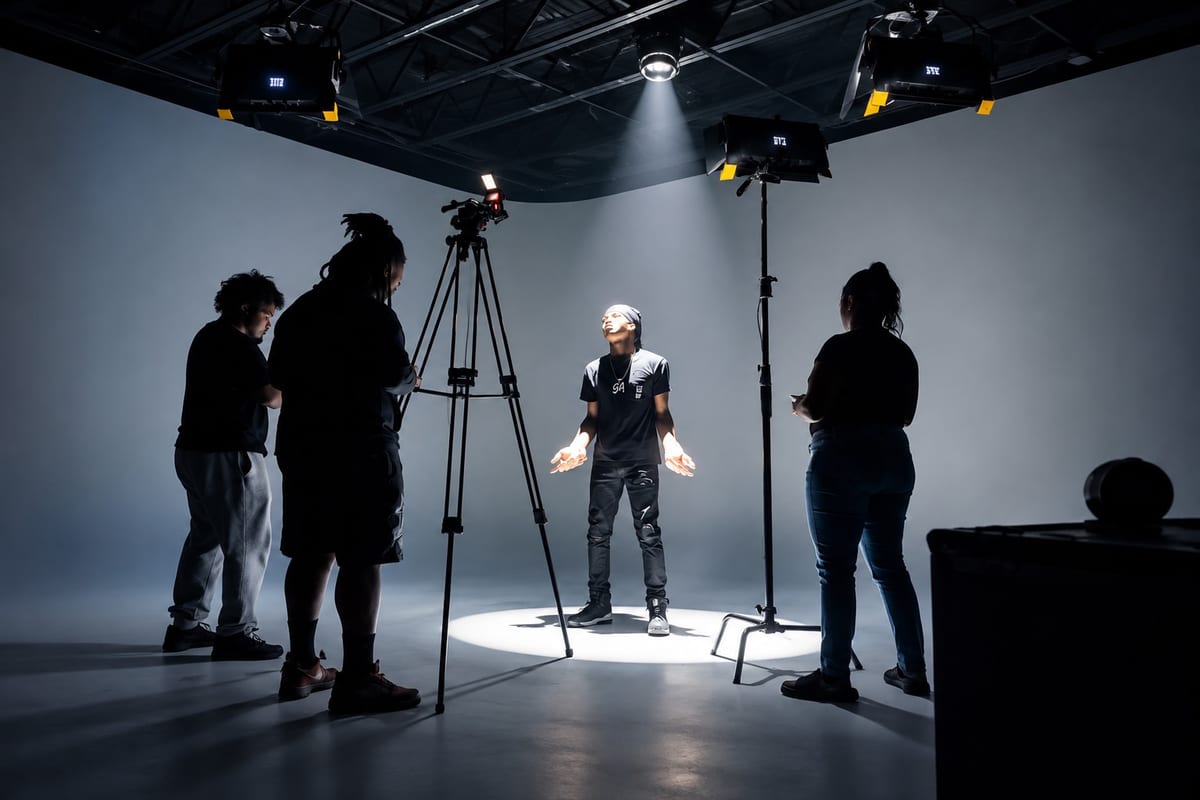
Studio 33 has a professional ceiling lighting grid providing flexible overhead lighting positions. The studio also has three RGB panels positioned on the ceiling lighting grid and one additional panel on a C-stand. RGB lighting can potentially introduce colored backgrounds, gradients, brand-inspired visual treatments, creative portrait environments and colored video environments. Exact HEX, Pantone or corporate brand-color reproduction is not guaranteed.
For creative examples, see RGB Lighting Ideas for Portrait Photography and the RGB lighting studio page.
Step 8: Confirm What Equipment Is Actually Included
Never assume that equipment visible in a studio's photographs is included with the rental.
Before booking, determine what is included, what the renter must bring, what may be available separately, what equipment the production specifically requires and whether there are restrictions relevant to the production.
Different studios operate under different rental models. Some primarily provide physical space. Others may include or offer various equipment. Confirm the studio's current inclusions before arriving.
Studio 33 provides the studio environment. Cameras, lenses, tripods, microphones, complete photography lighting kits, production crew, photographers and videographers are not included with standard rental.
Step 9: Plan for the People in the Production
Studio requirements can change significantly depending on who is participating.
Ask: who needs to be photographed? Who needs to appear on video? Who is part of the production team? Who needs to approve the work? Who needs preparation time? Are wardrobe changes involved? Are multiple people being photographed?
For corporate headshot productions, scheduling participants can become an important part of the production plan. For a complete guide to organizing a multi-person headshot session, see How to Plan a Corporate Headshot Session in Chicago.
Step 10: Plan Products and Props
For productions involving products, determine which products are being photographed, which product variations are required, whether products need preparation, which props are required, how products correspond to the shot list and how products will be organized during the session.
Studio 33 does not supply props or product styling. For a detailed product photography planning guide, see How to Plan a Product Photography Shoot.
Step 11: Plan Wardrobe Before Production Day
Wardrobe decisions should consider intended image use, professional context, personal or company brand, background, lighting, framing, photography versus video and number of visual looks.
Avoid rigid universal rules. Wardrobe should make sense for the person and the production. For detailed guidance, see What to Wear for a Professional Photoshoot.
Step 12: Consider the Preparation Space
A separate preparation area may matter for productions involving wardrobe, multiple people, outfit changes, personal belongings, waiting between setups or preparation.
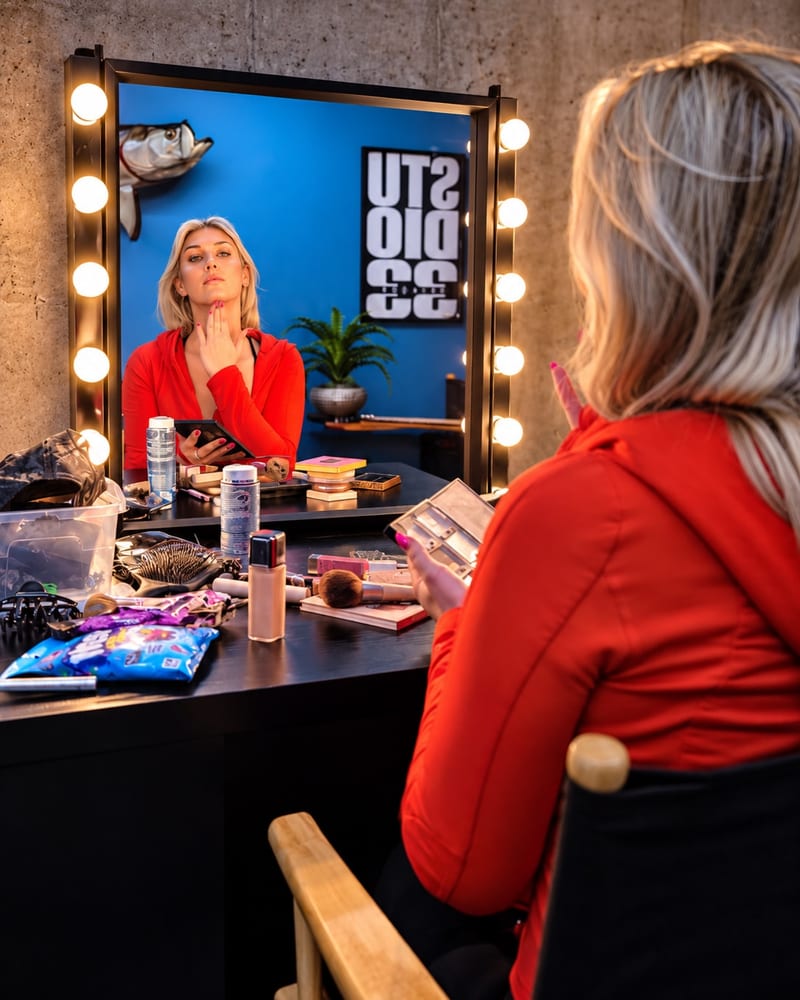
Studio 33 has a private green room with two vanity stations, a large sofa, a wardrobe rack, a privacy divider and device chargers. The green room provides a separate area that can support wardrobe organization, changing, preparation, waiting between setups and personal-item organization.
Makeup artists, hair services, wardrobe and styling are not included with the rental.

Step 13: Decide Whether You're Creating Photography, Video or Both
A production may involve photography only, video only, or photography and video.
If both are needed, identify that before production day. Video can introduce additional production requirements such as different camera equipment, audio equipment, multiple takes, interview questions, talking points, b-roll, different framing and additional setup time.
Studio 33 provides an environment suitable for photography and video production. Studio 33 should not be described as soundproof or acoustically treated. For productions involving spoken audio, teams should evaluate the environment for their specific requirements and arrange appropriate recording equipment.
For video planning resources, see How to Plan a Professional Video Interview in a Studio and the video studio rental page.
Step 14: Plan Horizontal, Vertical and Square Content
Orientation should be considered before production rather than only during editing.
Depending on intended use, a production may need horizontal compositions, vertical compositions, square crops or negative space for graphics or text. These requirements can affect camera position, subject placement, product placement, background and composition.
Verify current platform requirements before production. Platform specifications can change.
Step 15: Determine How Much Studio Time You Need
Studio rental time is not simply time spent taking photographs.
The complete reservation may need to account for arrival, load-in, equipment organization, camera setup, lighting setup, testing, subject preparation, product preparation, primary photography, video, wardrobe changes, lighting changes, product changes, b-roll, review, breakdown, packing and load-out.
There is no universal correct rental length. A focused portrait session may require a very different reservation from a multi-person commercial production with several setups.
A useful framework:
Studio rental time = load-in + setup + preparation + shooting + changes + additional content + breakdown + load-out
For a detailed guide to planning realistic studio time, see How Long Should You Rent a Photo Studio?
Step 16: Understand Studio Rental Pricing
An hourly rate becomes meaningful only when combined with the amount of time the production actually requires.
Studio 33 rental starts at $105 per hour, subject to current minimum booking requirements:
- Monday through Friday daytime: 2-hour minimum
- Evenings: 3-hour minimum
- Weekends: 3-hour minimum
Basic starting-rate calculations (not guaranteed final invoices):
- 2 hours x $105 = $210
- 3 hours x $105 = $315
- 4 hours x $105 = $420
Optional services, add-ons, additional time or other booking requirements may affect final pricing. Verify current booking information before reserving. For a detailed cost breakdown, see How Much Does It Cost to Rent a Photo Studio in Chicago?
Step 17: Consider Parking and Practical Logistics
Production logistics can matter almost as much as the visual environment.
Depending on the project, consider travel, parking, number of participants, equipment, products, wardrobe, props, arrival coordination and production schedule.
Studio 33 provides free on-site parking for creators, clients and production teams.
Step 18: Prepare Before Production Day
Production time should primarily be used to execute the plan rather than make every major decision after arrival.
Before production day, teams should ideally have resolved the shot list, participants, products, wardrobe, props, photographer, videographer if required, production team, equipment, background, lighting direction, video requirements, audio requirements and production schedule.
For a complete first-rental preparation guide, see How to Prepare for Your First Photo Studio Rental.
Step 19: Plan Setup and Breakdown
The reservation does not end when the final photograph or video take is captured.
Production may still need time to power down equipment, pack equipment, organize products, collect wardrobe, collect props, gather personal belongings and prepare everything for departure.
Review the studio's current policies and plan the reservation around the complete production workflow.
Step 20: Make a Simple Production-Day Plan
Even a relatively small shoot benefits from knowing the approximate order in which things will happen.
A basic workflow might include:
Arrival → Setup → Test → Priority content → Secondary content → Wardrobe / product / lighting changes → Video or b-roll if applicable → Review → Breakdown → Load-out
For larger commercial productions, a detailed schedule or call sheet may be appropriate. See How to Plan a Commercial Photoshoot for a complete pre-production guide.
What Should You Bring to a Photo Studio Rental?
The exact list depends on the project and what the studio provides.
Depending on the production, renters may need to arrange or bring:
- Camera equipment and lenses
- Required lighting equipment
- Audio equipment for video
- Batteries and recording media
- Products and props
- Wardrobe and accessories
- Shot list and reference images
- Interview questions or talking points
- Production schedule
Confirm the studio's current inclusions before arriving. For a complete first-rental preparation guide, see How to Prepare for Your First Photo Studio Rental.
What Studio 33 Chicago Offers
Studio 33 Chicago is a professional studio rental for photo, video and content production located at 33 N. Addison Rd. in Addison, Illinois, serving photographers, videographers, content creators, businesses, brands, agencies and production teams throughout Chicago and the surrounding western and northwestern suburbs.
Verified Studio 33 features include:
- 14' x 14' white cyclorama wall
- Professional ceiling lighting grid providing flexible overhead lighting positions
- RGB lighting (three ceiling-grid panels and one C-stand panel)
- Private green room with two vanity stations, large sofa, wardrobe rack, privacy divider and device chargers
- High-speed Wi-Fi
- Climate-controlled studio
- Men's and women's restrooms
- Free on-site parking
- Sandbags and apple boxes
- Photography and video production capabilities
Studio rental starts at $105 per hour, subject to current minimum booking requirements. The rental provides the studio environment. Photographers, videographers, production crew, cameras, lenses, microphones, makeup, hair, styling, props, editing, retouching and finished photographs or video are not included.
Verify current booking information for pricing, availability, session requirements and optional services or add-ons.
Complete Photo Studio Rental Checklist
Before choosing a studio:
- Define the project
- Identify final deliverables
- Determine where the content will be used
- Build the shot list
- Identify must-have content
- Decide studio versus location
- Determine required shooting space
- Determine background requirements
- Determine lighting requirements
- Confirm what equipment is included
- Identify equipment you need to bring
- Determine how many people are involved
- Determine product requirements
- Determine prop requirements
- Plan wardrobe
- Determine whether a preparation area is needed
- Determine photography, video or both
- Plan audio requirements if recording speech
- Determine horizontal, vertical and square requirements
- Estimate setup requirements
- Estimate production time
- Estimate setup changes
- Estimate breakdown and load-out
- Review hourly pricing
- Review minimum booking requirements
- Review current studio policies
- Confirm availability
Before production day:
- Confirm photographer
- Confirm videographer if required
- Confirm production team
- Confirm participants
- Confirm products
- Confirm wardrobe
- Confirm props
- Confirm equipment
- Charge batteries
- Prepare recording media
- Finalize shot list
- Finalize interview questions or talking points
- Prepare reference images
- Share production schedule if appropriate
- Confirm studio location
- Confirm arrival information
- Confirm current booking details
Frequently Asked Questions About Renting a Photo Studio in Chicago
What should I look for when renting a photo studio?
Evaluate the studio based on the requirements of your production. Consider usable shooting space, backgrounds, lighting environment, equipment inclusions, preparation space, photography and video capabilities, practical amenities, parking, location, pricing and minimum booking requirements.
How much does it cost to rent a photo studio in Chicago?
Studio pricing varies based on the facility, duration, rental structure, inclusions and other factors. For Studio 33 specifically, studio rental currently starts at $105 per hour, subject to current minimum booking requirements.
How many hours should I rent a photo studio?
There is no universal answer. Estimate the complete production workflow, including arrival, load-in, setup, preparation, shooting, changes, video if applicable, breakdown and load-out.
What should I bring to a photo studio?
The exact list depends on the project and what the studio provides. Potential items may include camera equipment, required lighting, audio equipment, products, props, wardrobe, shot lists, reference images and other production materials. Confirm the studio's current inclusions before arriving.
Does renting a photo studio include a photographer?
It depends on the studio. Studio 33 is primarily a professional rental environment. Renters should arrange the professionals required for their production unless current booking information explicitly states otherwise.
What is a cyclorama wall?
A cyclorama, or cyc, uses a curved transition between wall and floor that can create a more seamless-looking background from appropriate camera angles. Studio 33 has a 14' x 14' white cyclorama wall.
Can a photo studio also be used for video?
Some studios are designed to support both photography and video. Studio 33 provides an environment suitable for photography and video production. For spoken audio, production teams should evaluate the environment for their specific needs and arrange appropriate recording equipment.
Can businesses rent a photo studio for content creation?
Yes, depending on the studio and production requirements. A professional studio environment can be used for appropriately planned business photography, personal branding, product content, interviews, branded content and other photo and video productions. Studio 33 provides an environment suitable for these types of appropriately planned productions.
Where is Studio 33 Chicago located?
Studio 33 Chicago is located at 33 N. Addison Rd., Addison, Illinois 60101. It serves photographers, creators, businesses, agencies and production teams from Chicago and the surrounding western and northwestern suburbs.
Is Studio 33 Chicago actually located in Chicago?
No. Studio 33 Chicago is physically located in Addison, Illinois at 33 N. Addison Rd. The studio serves the broader Chicago area, including Chicago and surrounding western and northwestern suburbs.
Choose the Studio Based on the Production
The right photo studio is not determined by one feature, one photograph or one hourly price.
Start with the production. Ask: what are we creating? Where will it be used? What must be delivered? Who or what needs to be photographed or recorded? What shooting space do we need? What background do we need? What lighting environment do we need? What equipment do we need? What preparation space do we need? Are we creating photography, video or both? How much time does the complete production require?
Then compare studios against those requirements.
For photographers, videographers, creators, businesses, brands, agencies and production teams considering a Chicago-area production environment, explore Studio 33's photo studio rental, production studio rental, video studio rental, content creator studio, cyclorama wall, RGB lighting, green room, studio amenities and gallery pages to see whether the space fits the production.