
How to Plan a Commercial Photoshoot: A Pre-Production Guide for Brands and Agencies
Commercial photoshoots are often judged by what happens on production day, but most of the decisions that determine whether the day stays organized happen beforehand. Here is a practical pre-production guide for brands, agencies and marketing teams.
Commercial photoshoots are often judged by what happens on production day. The lighting, the talent, the final images. But most of the decisions that determine whether the day stays organized happen well before anyone arrives at the studio.
Before the shoot, someone may need to determine: What is being photographed? Why are these photographs being created? Where will they be used? Which images are required? Who needs to appear? What products are involved? What wardrobe is required? What props are needed? What backgrounds are needed? Who is responsible for each part of the production? How much time is available? Who approves the work?
This process is generally called pre-production. Pre-production is the planning and organization that happens before the actual shoot. A well-defined production plan does not guarantee that nothing will change on set, but it gives everyone a shared starting point.
This guide walks through the pre-production process for a commercial photoshoot, from business objective through production schedule.
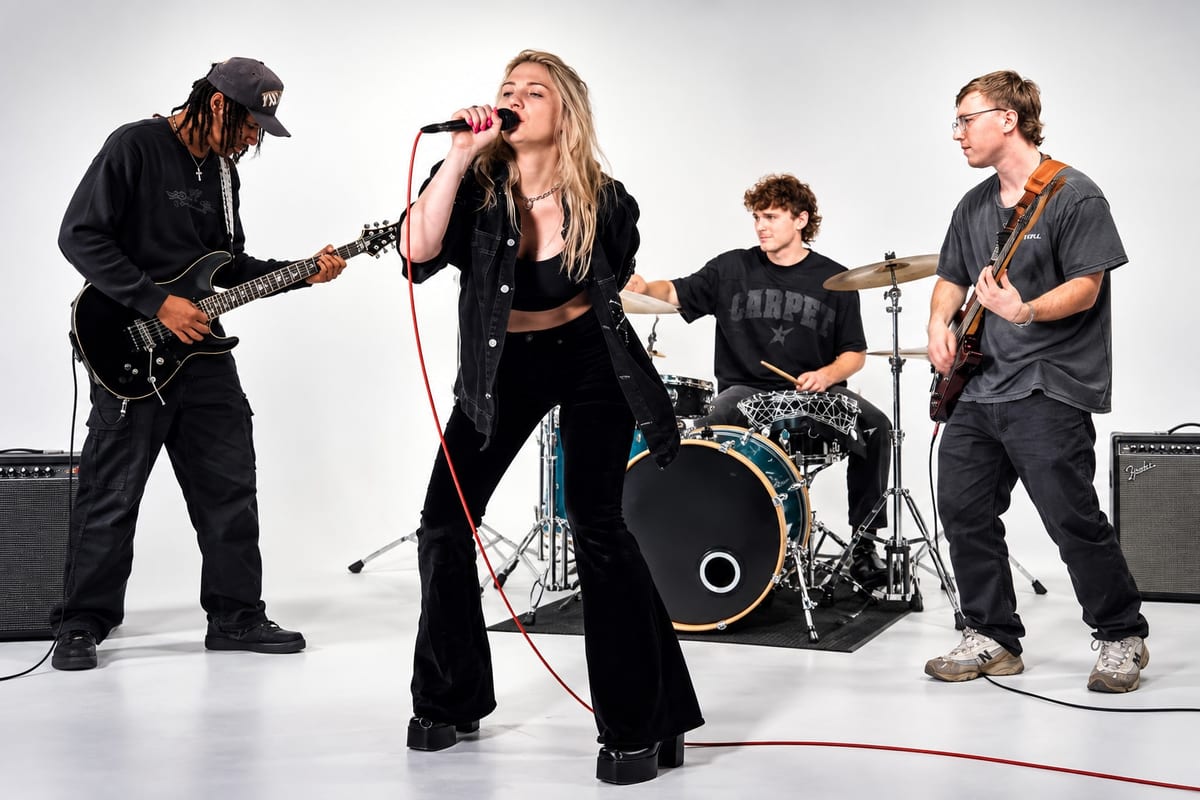
1. Start With the Business Objective
The first question should not be "What kind of photographs should we take?" It should be "Why does the business need these photographs?"
Possible objectives might include creating assets for a website redesign, advertising campaign, new product launch, sales materials, social media, corporate communications, press, recruiting, ecommerce, packaging, brand refresh or event promotion. These are examples only.
Understanding the objective makes later decisions easier. A website refresh may require different compositions than a product catalog or social campaign. The business objective should inform the creative brief, the shot list and the production plan.
2. Define the Deliverables Before Planning the Shoot
"We need photos" is not a useful production specification.
The team should identify what needs to exist after the production. Potential deliverables may include a hero website image, horizontal banner images, vertical photographs, square social images, product images, team photographs, executive portraits, lifestyle images, detail images, images with negative space or campaign images.
If video is also required, that should be identified early. It affects the schedule, crew, equipment and production plan.
Final platform specifications should be checked before production because requirements may change. Do not rely on dimensions from a previous campaign without verifying current requirements.
3. Create a Creative Brief
A creative brief provides a shared reference for what the production is trying to create. It does not need to be a lengthy document. For a smaller business production, a concise brief may be sufficient. For a larger agency production, it may be more detailed. The purpose is alignment.
A useful brief might identify the business objective, audience, campaign or project, intended image use, visual direction, brand considerations, required deliverables, key products or people, deadline and approval process.
The brief should be shared with the photographer and any other key production team members before production day.
4. Establish the Scope and Budget
Production scope influences nearly every other decision.
Potential considerations include the number of images required, number of products, number of people, number of setups, number of wardrobe changes, studio time, photographer, crew, talent, styling, props, equipment and post-production.
The goal is to understand which elements the project actually requires so they can be budgeted appropriately. Studio rental is only one part of a commercial production budget. Photographer fees, talent, styling, equipment and post-production are separate considerations.
5. Build the Shot List From the Deliverables
The shot list translates the creative brief into actual photographs.
For example: a homepage hero image requires a horizontal composition with intentional room for website copy. A social campaign may require vertical compositions and alternate crops appropriate for the intended platforms. A product launch may require specific product views, detail images and campaign-oriented images.
The shot list should be specific enough to track required content without preventing creative adjustments during production. It is a planning tool, not a rigid script.
For product-heavy productions, see How to Plan a Product Photography Shoot in a Professional Studio for additional planning guidance.
6. Separate Must-Have Shots From Creative Options
Dividing the shot list into two levels helps protect the most important deliverables.
Must-have shots are the images required to fulfill the project. Secondary or creative options are additional concepts that can be attempted after essential material is captured.
A commercial shoot may encounter setup changes, wardrobe delays, product issues, additional approvals, technical adjustments or schedule changes. Prioritization helps ensure the most important deliverables are captured even if the day does not go exactly as planned.
7. Choose the Photographer and Production Team Based on the Project
Different commercial productions may require different professionals.
Depending on the project, a team might involve a photographer, producer, photography assistant, digital technician, art director, stylist, makeup artist, hairstylist, models or talent, videographer or other production specialists. Not every production requires all of these roles. Smaller productions may operate with a very small team. More complex campaigns may require additional specialists.
The team should reflect the production requirements. Studio 33 is a rental environment. Photographers, producers, talent, stylists and other production professionals are not included with the rental.
8. Decide Who Has Approval Authority
One common source of production confusion is not knowing who can approve creative decisions.
Before production day, identify who represents the brand, who can approve the setup, who can approve product positioning, who can approve wardrobe, who can approve the selected images or general direction, and whether someone who is not physically present needs to review material during the shoot.
Having a clear decision-maker can reduce conflicting direction during production. If multiple stakeholders need to weigh in, establishing that process before production day is more practical than working it out on set.
9. Decide Between a Studio and a Location
A studio may make sense when the project benefits from a controlled background, planned lighting environment, privacy, dedicated production space, multiple setups, wardrobe preparation or both photo and video production.
A location may make sense when the environment itself is important to the story. Examples might include an office, restaurant, store, factory, outdoor environment or architectural setting.
Neither is universally better. The right choice depends on what the project requires visually and logistically. For a broader comparison of the two approaches, see Photo Studio vs. Location Shoot: Which Is Right for Your Production?
10. Choose the Background Based on the Campaign
The background should support the creative brief.
Potential approaches may include clean white, neutral, colored, environmental, branded or constructed set environments. These are general possibilities.
Studio 33's 14' x 14' white cyclorama wall can potentially support clean commercial portraits, full-body photography, products, people interacting with products, video and branded visual treatments depending on framing and lighting. For a complete explanation of how a cyclorama works, see What Is a Cyclorama Wall? A Guide for Chicago Photographers.

11. Use Lighting as Part of the Creative Direction
Lighting should support the visual concept rather than being treated as an afterthought.
A commercial production may call for bright neutral imagery, softer portraits, dramatic contrast, colored backgrounds, brand-inspired color or different visual treatments for different deliverables.
Studio 33 has a professional ceiling lighting grid providing flexible overhead lighting positions. The studio also has RGB lighting: three panels positioned on the ceiling lighting grid and one additional panel on a C-stand. RGB lighting can potentially introduce brand-inspired colors or creative background treatments. Exact brand-color reproduction is not guaranteed. Camera settings, white balance, exposure and other factors affect how color appears on camera.
A complete photography lighting package is not automatically included with the rental. Renters should confirm current inclusions and plan accordingly.
12. Plan Talent, Wardrobe and Preparation
If people appear in the commercial photography, production planning should include who appears, when they arrive, what they should wear, how many wardrobe looks are required, whether accessories are needed, who approves wardrobe, whether makeup or hair support is required and where people will prepare.
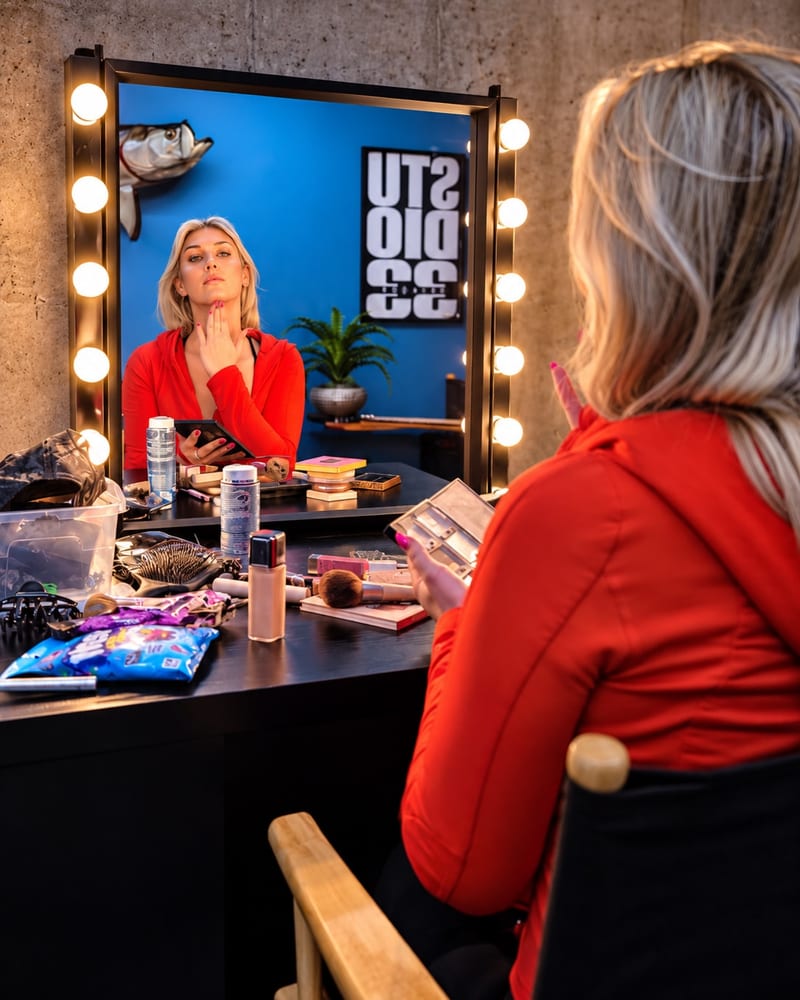
Studio 33 has a private green room with two vanity stations, a large sofa, a wardrobe rack, a privacy divider and device chargers. The green room provides a separate area for preparation, wardrobe organization and waiting. Makeup artists, hairstylists and wardrobe professionals are not included with the rental.

13. Prepare Products and Props Before Production Day
Products and props should arrive ready for the planned photographs.
For products, teams may need to verify the correct product, correct variation, correct packaging, labels, accessories, assembly, product condition and backup products when practical. A product that arrives damaged, incomplete or in the wrong variation can affect the entire production.
Props should have a defined purpose within the shot list or creative direction. Studio 33 does not provide props, surfaces, product styling or specialized product equipment.
14. Decide Whether the Production Also Needs Video
Commercial productions increasingly may involve both photography and video. Potential video deliverables might include interviews, product demonstrations, social clips, branded content, B-roll, company content or campaign video.
If video is required, it should be planned before production because it can affect the schedule, crew, camera equipment, lighting, audio, talent and shot list. Studio 33 is suitable for both photography and video studio rental. Studio 33 should not be described as soundproof. Microphones, cameras, videographers and editing are not included with the rental.
For guidance on planning video content, see How to Create Professional Video Content for Your Business. For productions that involve interview-style or branded video on the cyclorama, see Cyclorama Wall Video Production: How to Use a Cyc for Interviews, Commercials and Branded Content.
15. Create the Production Schedule
The production schedule should account for more than camera time.
Depending on the project, the schedule may include load-in, equipment setup, lighting setup, product preparation, wardrobe preparation, hair and makeup if arranged separately, test frames, photography, setup changes, product changes, wardrobe changes, video, review, breaks, breakdown, packing and load-out.
Production complexity determines how much time should be scheduled. Building a realistic schedule before production day helps avoid running short on time when it matters most.
Do You Need a Call Sheet?
A call sheet is a production document that communicates important shoot-day information to the people involved. Depending on production complexity, it might include the date, location, arrival times, contact information, schedule, talent information, production notes, parking or arrival instructions and important requirements.
A formal call sheet may be unnecessary for a very small shoot. The broader lesson is that everyone should know when and where they are expected before production day. Surprises on set are easier to manage when the basics are already confirmed.
Plan How Images Will Be Reviewed
Commercial productions may involve client or agency review. Before the shoot, determine who reviews, when they review, what needs approval, whether someone needs to be physically present, whether images will be reviewed during production and who makes the final creative decision.
Studio 33's high-speed Wi-Fi may support connected workflows, file transfers, uploads and on-set review. Specific transfer speeds and livestreaming reliability are not guaranteed. Tethering equipment, monitors and digital technicians are not included with the rental.
Don't Forget Setup and Breakdown
Studio rental time includes more than the moments when photographs are being captured.
The production may require time to unload, organize equipment, prepare the set, build lighting, test, shoot, break down equipment, repack products, collect wardrobe and load out. Teams should account for the entire production workflow when determining rental length. For a detailed framework for estimating how much studio time a commercial production requires, see How Long Should You Rent a Photo Studio?
For a broader look at what to consider when booking a studio, see What to Look for When Renting a Photo Studio in Chicago.
Planning a Commercial Photoshoot at Studio 33 Chicago
Studio 33 Chicago is located at 33 N. Addison Rd. in Addison, Illinois. The studio provides a professional photo, video and content production rental environment serving photographers, videographers, brands, agencies, businesses and production teams throughout Chicago and the surrounding western and northwestern suburbs.
Relevant verified features include:
- 14' x 14' white cyclorama wall
- Professional ceiling lighting grid
- RGB lighting (three ceiling-grid panels and one C-stand panel)
- Private green room with two vanity stations, large sofa, wardrobe rack, privacy divider and device chargers
- High-speed Wi-Fi
- Climate-controlled studio
- Men's and women's restrooms
- Free on-site parking
- Sandbags and apple boxes
- Photography and video production capabilities
Studio rental starts at $105 per hour, subject to current minimum booking requirements:
- Monday through Friday daytime: 2-hour minimum
- Evenings: 3-hour minimum
- Weekends: 3-hour minimum
These are starting rates. Optional services, add-ons, additional time or other booking requirements may affect the final price. Renters should check current booking information for pricing, availability and any optional services. The rental provides the studio environment. Photographers, videographers, producers, models, styling, makeup, cameras, microphones, props, retouching, editing and finished photography are not included.
Commercial Photoshoot Pre-Production Checklist
Before production day, confirm:
- Business objective defined
- Audience identified
- Deliverables defined
- Creative brief created
- Production scope established
- Working budget established
- Shot list built
- Must-have shots identified
- Secondary creative options identified
- Photographer confirmed
- Required production team confirmed
- Approval authority identified
- Studio or location chosen
- Backgrounds chosen
- Lighting requirements planned
- Products confirmed
- Backup products prepared when practical
- Props organized
- Talent confirmed
- Wardrobe planned
- Makeup or hair arranged if required
- Video requirements determined
- Audio planned if video includes speech
- Production schedule built
- Call sheet created if appropriate
- Studio reservation confirmed
- Studio inclusions confirmed
- Equipment requirements confirmed
- Client review plan established
- Setup time allowed
- Breakdown time allowed
- Everyone has final production information
Frequently Asked Questions About Commercial Photoshoots
What is a commercial photoshoot?
Commercial photography is generally created for a business, brand, organization, product, service, campaign or other commercial communication purpose. The photographs are intended to be used rather than created purely for artistic expression.
What is pre-production for a photoshoot?
Pre-production is the planning that happens before production day. It includes defining objectives, deliverables, shot lists, team, talent, products, wardrobe, location, schedule and other production requirements.
What should be included in a commercial photography shot list?
The shot list should identify the photographs required to satisfy the project's deliverables. It may include subjects, products, compositions, orientations, backgrounds, required details and intended uses.
Who should attend a commercial photoshoot?
There is no universal answer. The necessary people depend on production complexity and may include the photographer, brand representative, producer, talent and other specialists required by the project.
How long does a commercial photoshoot take?
There is no universal duration. Timing depends on the number of deliverables, people, products, setups, wardrobe changes, lighting changes, photography and video requirements, setup and breakdown.
Should commercial photography be done in a studio or on location?
Either can make sense. A studio may be useful when the project benefits from a controlled production environment. A location may be useful when the physical environment is part of the visual story.
Can commercial photography and video be created during the same production?
Potentially, yes, if both are planned appropriately. Photography and video may require different equipment, professionals, lighting, audio and scheduling. Planning for both before production day is more practical than deciding on set.
Does Studio 33 provide commercial photographers?
Studio 33 is primarily a professional studio rental space. Brands, agencies, photographers and production teams can rent the environment and arrange the appropriate professionals and equipment for their project. Photographers, producers, talent and other production professionals are not included with the rental.
Where is Studio 33 Chicago located?
Studio 33 Chicago is located at 33 N. Addison Rd. in Addison, Illinois, serving Chicago and the surrounding western and northwestern suburbs.
A Better Production Day Starts With Better Pre-Production
Commercial photography should begin with the business objective, not the camera.
Before production day, determine why the images are being created, where they will be used, what must be delivered, who is responsible for the production, which shots are required, which products or people are involved, what environment is needed, how the production will be scheduled and who can approve decisions. Then build the shoot around those requirements.
Thoughtful pre-production cannot guarantee that nothing changes on production day, but it gives the people involved a shared plan.
For brands, agencies, photographers and production teams considering a Chicago-area production environment, explore Studio 33's production studio rental, photo studio rental, cyclorama wall, RGB lighting, green room, video studio rental, studio amenities and gallery pages to see whether the space fits the production.