
Cyclorama Wall Video Production: How to Use a Cyc for Interviews, Commercials and Branded Content
A white cyclorama wall may look simple when the studio is empty. On camera, it can become a highly adaptable video background. Here is how to use one for interviews, branded content, product demonstrations and more.
A white cyclorama wall may look simple when the studio is empty. On camera, it can become a highly adaptable video background.
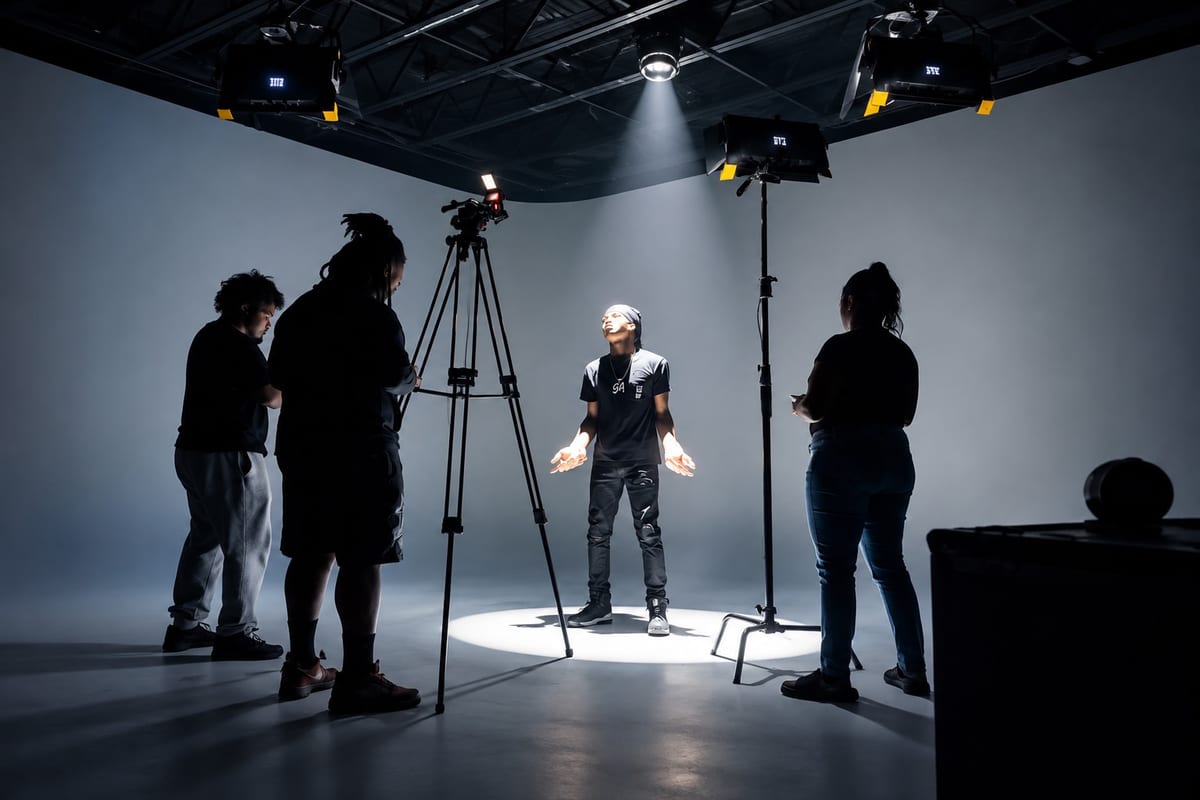
Depending on lighting, camera angle, exposure, subject position, color and composition, the same physical white cyc can appear bright and minimal, neutral, dramatic, colored, brand-inspired or abstract. That range of possibilities is what makes cyclorama studios useful for productions that need a controlled visual environment without building an elaborate physical set.
The cyc does not create these looks automatically. The production team still determines the lighting, camera setup, audio plan and creative direction. The studio provides the physical environment. What happens inside it is up to the people using it.
This guide uses Studio 33's 14' x 14' white cyclorama wall as a reference throughout.

First, What Is a Cyclorama Wall?
A cyclorama, commonly called a cyc, uses a curved transition between the wall and floor rather than a traditional 90-degree corner. From appropriate camera angles, this can create a more seamless-looking background with no visible line where the wall meets the floor.
This is useful for both photography and video. For a complete introduction to how cyclorama walls work, see What Is a Cyclorama Wall? A Guide for Chicago Photographers and the Studio 33 cyclorama wall page. This article focuses specifically on video production applications.
Why Use a Cyclorama Wall for Video?
The primary advantage of a cyc for video is control over the frame.
A production team can decide what the audience sees rather than working around a visually busy existing location. The cyc provides a neutral starting environment that can be shaped through lighting, camera position and creative decisions.
Specific advantages include a visually clean environment, reduced visible wall-to-floor lines from many camera angles, flexibility in framing, space for lighting the background separately from the subject, and the ability to introduce color through lighting. The same physical space can support multiple types of video without rebuilding the entire set between setups.
The cyc does not eliminate all production variables. Camera angles, lighting decisions, wardrobe, audio and production planning all still matter.

Using a White Cyc for Interviews
A cyclorama can work well for interview-style productions. Potential applications include executive interviews, company spokesperson content, expert commentary, educational content, speaker profiles and professional introductions.
An interview does not necessarily require the subject to sit directly against the white background. Subject-to-background distance can influence background brightness, shadow behavior, visual separation and overall depth. Moving a subject further from the cyc while lighting the background separately can create a different visual result than placing the subject close to the wall.
The appropriate setup depends on the specific production. For a detailed guide to planning an interview shoot, see How to Plan a Professional Video Interview in a Studio.
White Does Not Have to Look Pure White
This is an important production concept that surprises some teams the first time they work with a cyc.
A white cyclorama is a physical surface. How white it appears on camera depends on background lighting, subject lighting, exposure, camera settings, subject distance and post-production decisions. A white wall can potentially appear bright white, light gray, medium gray, darker or colored depending on how the production is designed.
This gives video teams meaningful creative flexibility. The same physical studio can support a clean, high-key interview look and a moodier, lower-key visual treatment without changing the background itself. The lighting and camera decisions determine the result.
Using RGB Lighting to Change the Background
Studio 33 has RGB lighting: three panels positioned on the ceiling lighting grid and one additional panel on a C-stand.
RGB lighting can potentially introduce single-color backgrounds, color gradients, contrasting colors, brand-inspired color, background accents and subject separation. A production might capture one setup with a relatively neutral background and another with colored lighting. The physical studio has not changed, but the visual treatment has.
Changing the RGB color does not instantly create a completely finished new set. Camera exposure, subject lighting, wardrobe and other production decisions may also need adjustment when the background color changes. Testing combinations before recording important material is worth the time. For creative examples of how colored lighting can be used in portrait and studio sessions, see RGB Lighting Ideas for Portrait Photography — many of the concepts translate directly to video.
Using Brand Colors Without Building a Physical Set
Some branded productions may want color associated with company branding, campaign design, product packaging or event creative direction. RGB lighting can potentially introduce brand-inspired color into the environment without requiring the entire physical background to be rebuilt between setups.
One important clarification: lighting color as captured by a camera may be influenced by camera settings, white balance, exposure, other light sources, surface characteristics and post-production. Use "brand-inspired color" as the working concept rather than expecting exact Pantone or HEX reproduction. Testing the color on camera before recording is the practical way to evaluate whether the result fits the production's needs.
Using a Cyc for Talking-Head Content
A clean background can work well for educational videos, business updates, professional insights, FAQs, social video, internal communications and short introductions. A simple visual environment keeps attention on the speaker rather than the surroundings.
Framing options include tight, medium, wider, centered and off-center compositions. Off-center framing can potentially create negative space for titles, captions, graphics, product imagery or supporting information. This is a compositional decision the production team makes during camera setup. Studio 33 does not provide graphics or video editing.
Plan for Horizontal and Vertical Video
Video may eventually be distributed across different formats. Horizontal video is commonly used for websites, presentations, YouTube, corporate video and traditional video platforms. Vertical video is commonly used for Reels, Stories, Shorts and mobile-oriented social content.
Platform specifications change. Production teams should verify current requirements for the platforms they are targeting.
If both formats are required, they should be considered during camera framing, subject positioning, background design and graphic placement rather than simply cropping everything afterward. A composition that works well horizontally may not translate cleanly to vertical without planning for it from the start.
Cyclorama Walls for Commercial and Branded Content
A cyc can provide an environment for more developed commercial concepts. Possible applications include product-focused video, branded content, promotional video, company content, demonstration videos, campaign assets and social advertising creative.
The cyc provides a physical starting environment. The production team determines the creative concept, brings the required equipment and crew, and produces the finished content. Studio 33 is a rental space, not a full-service production company. For a detailed guide to planning a commercial shoot from concept through production day, see How to Plan a Commercial Photoshoot — the pre-production framework applies equally to commercial video.
Product Demonstrations on a Cyclorama
A cyc may be useful when products need to be shown with a person, a presenter, wider framing, full-body interaction or a visually simple background. The appropriate setup depends on product size, product surface, reflections, required camera angles, lighting and demonstration requirements.
A cyc is not ideal for every product. For small tabletop products, a dedicated product photography setup may make more sense than a full cyclorama environment. For products that require a presenter or full-body framing, a cyc can provide a clean background that keeps the focus on the product and the person demonstrating it. For planning guidance, see How to Plan a Product Photography Shoot in a Professional Studio.
Full-Body Video and Movement
One reason productions seek a cyc studio is to capture more than a seated or tightly framed subject. Depending on the production and available shooting space, a cyc can support wider compositions involving standing presenters, full-body framing, demonstrations and controlled movement.
Studio 33's cyclorama wall measures 14' x 14'. Production teams should consider whether that background dimension fits the framing their project requires before booking.
Camera Angle Matters More Than People Expect
A seamless-looking background depends partly on camera position and composition. A camera angle that reveals the edge of the cyc, other walls, studio equipment, ceiling areas or production materials may create a very different result from a tightly controlled frame.
The production team should establish intended camera angles early in the planning process. This becomes especially important with multiple cameras, wide compositions, moving cameras and productions that need both horizontal and vertical versions. Not every angle provides an infinite background. Planning camera positions before arriving at the studio helps avoid discovering problems during the session.
Light the Subject and Background Intentionally
Subject lighting and background lighting can serve different purposes, and treating them as separate decisions gives the production more control over the final frame.
The production team may want the background to appear bright, neutral, darker or colored while maintaining a different lighting treatment on the person or product. Separating those decisions can create more visual depth and flexibility.
Studio 33 has a professional ceiling lighting grid providing flexible overhead lighting positions, along with the RGB panels described above. The studio does not automatically supply a complete photography or video lighting package. Renters should confirm current inclusions and plan the additional lighting equipment their production requires.
Wardrobe Changes How the Cyc Looks on Camera
Wardrobe should be considered alongside background and lighting decisions. Light wardrobe against a bright background, dark wardrobe against a darker background, and colored wardrobe with RGB lighting may create different levels of visual separation between the subject and the environment.
There are no rigid rules here. The right combination depends on the production's visual goals. Testing wardrobe options against the planned background and lighting before recording important material is a practical way to evaluate what works.
Audio Still Needs Its Own Production Plan
A visually controlled studio does not automatically solve audio requirements.
For interviews, talking-head video and other spoken content, production teams should plan microphone choice, microphone placement, audio recording, monitoring and backup recording if appropriate. Studio 33 does not provide microphones or audio professionals as part of the standard rental.
Studio 33 should not be described as a soundproof studio. Teams with specific audio requirements should evaluate the environment for their production and bring or arrange the appropriate recording equipment. For detailed audio planning guidance, see How to Plan a Professional Video Interview in a Studio.
Capture B-Roll While the Set Is Built
Once the primary lighting and background are established, the production may also consider supporting footage. B-roll might include product details, hands, working shots, alternate angles, close-ups, subject movement and product interaction.
These clips provide additional options during editing. Capturing them while the set is already built and lit is more efficient than rebuilding the setup later. Studio 33 does not provide editing services.
Create Multiple Looks Before Rebuilding the Entire Setup
A production can consider grouping similar setups to use studio time efficiently. For example: a neutral interview setup, an alternate framing from the same general lighting environment, an RGB background variation, and product or B-roll content.
This is illustrative only. The correct workflow depends on the production. The broader principle is to plan the order of setups so the crew does not unnecessarily rebuild the entire production between every shot. For a detailed approach to planning a multi-setup session, see How to Plan a Content Creation Day.
What to Bring to a Cyc Wall Video Production
Requirements vary by production, but a team may need to plan for camera equipment, lenses, tripods or camera support, lighting required beyond the studio's verified features, audio equipment, batteries, media, wardrobe, products, props, a shot list, interview questions or talking points and visual references.
These are general examples. Studio 33 is a rental environment. Renters should confirm current studio inclusions before production day and arrange the equipment and professionals their production requires.
Allow Time for Setup, Testing and Breakdown
Rental time involves more than actual recording. A production may need time for load-in, camera setup, lighting, audio setup, testing, wardrobe, product preparation, recording, background changes, B-roll, breakdown, packing and load-out.
The required rental length depends on production complexity. Building setup and breakdown time into the reservation estimate helps avoid running short on time at the end of the session.
Using the Cyclorama Wall at Studio 33 Chicago
Studio 33 Chicago is located at 33 N. Addison Rd. in Addison, Illinois. The studio provides a professional photo, video and content production environment serving videographers, photographers, creators, businesses, brands, agencies and production teams throughout Chicago and the surrounding western and northwestern suburbs.
For video productions, verified features include:
- 14' x 14' white cyclorama wall
- RGB lighting (three ceiling-grid panels and one C-stand panel)
- Professional ceiling lighting grid
- Private green room with two vanity stations, large sofa, wardrobe rack, privacy divider and device chargers
- High-speed Wi-Fi
- Climate-controlled studio
- Men's and women's restrooms
- Free on-site parking
Studio rental starts at $105 per hour, subject to current minimum booking requirements:
- Monday through Friday daytime: 2-hour minimum
- Evenings: 3-hour minimum
- Weekends: 3-hour minimum
These are starting rates. Optional services, add-ons, additional time or other booking requirements may affect the final price. Renters should check current booking information for availability, pricing and any optional services. The rental price is for the studio environment. Videographers, cameras, microphones, crew, editing and finished video are not included.
For a broader look at video production in a studio environment, see How to Create Professional Video Content for Your Business and Behind the Scenes at Studio 33 Chicago: From Empty Cyc Wall to Finished Shoot.
Cyclorama Video Production Checklist
Before the shoot, confirm:
- Video purpose and intended use
- Final distribution platforms
- Horizontal and vertical requirements
- Shot list
- Camera angles
- How the cyc should appear
- Subject lighting plan
- Background lighting plan
- Whether RGB color is needed
- Wardrobe
- Products and props
- Interview questions or talking points
- Audio equipment
- B-roll plan
- Videographer or camera operator
- Required camera equipment
- Studio inclusions
- Studio reservation
- Time for load-in
- Time for setup and testing
- Time for breakdown and load-out
Frequently Asked Questions About Cyclorama Wall Video Production
What is a cyclorama wall?
A cyclorama wall uses a curved transition between the wall and floor, helping create a more seamless-looking background from appropriate camera angles. For a complete introduction, see What Is a Cyclorama Wall? A Guide for Chicago Photographers.
Can a cyclorama wall be used for video?
Yes. A cyc can provide a controlled background environment for interviews, talking-head content, branded video, commercial productions, product demonstrations and other types of video depending on the project's requirements.
Does a white cyclorama always look white on camera?
No. Its appearance depends on lighting, exposure, camera settings, subject position and other production choices. A white cyc may potentially appear bright white, gray, darker or colored depending on how it is lit and captured.
Can you use colored lighting on a white cyc wall?
Yes. Colored lighting, including RGB lighting, can change the appearance of a white cyclorama. Studio 33 has three RGB panels positioned on its ceiling lighting grid and one additional RGB panel on a C-stand.
Is a cyclorama good for interviews?
It can be. A cyc provides a visually controlled background that can be useful for interviews and talking-head video when that visual style fits the production. Audio should be planned separately.
Is Studio 33 soundproof?
Studio 33 should not be described as soundproof. Production teams with specific audio requirements should evaluate the environment and arrange appropriate recording equipment.
Does Studio 33 provide video equipment?
Studio 33 is primarily a studio rental environment. Cameras, microphones and specialized video equipment are not automatically included. Renters should verify current inclusions and arrange the equipment and professionals their production requires. See the studio amenities page for current details.
Where is Studio 33 Chicago located?
Studio 33 Chicago is located at 33 N. Addison Rd. in Addison, Illinois, serving Chicago and the surrounding western and northwestern suburbs.
Start With the Frame You Want to Create
A cyclorama wall is not a finished video set by itself. It is a flexible production environment.
The final result depends on camera position, lighting, background exposure, color, subject placement, wardrobe, products, audio and production planning. A white cyc might become a clean interview background for one production and a colored branded environment for another. The physical space is the same. The production decisions are what change it.
For videographers, businesses, creators, agencies and production teams considering a Chicago-area production space, explore Studio 33's cyclorama wall, video studio rental, production studio rental, RGB lighting, green room, studio amenities, content creator studio and gallery pages to see whether the space fits the production.