
Behind the Scenes at Studio 33 Chicago: From Empty Cyc Wall to Finished Shoot
A finished photograph hides most of the work that happened outside the frame. This is a behind-the-scenes look at how a professional production develops inside Studio 33 Chicago.
A finished photograph usually hides most of the work that happened outside the frame.
The viewer sees the subject, the product, the background, the lighting, the final composition. What they do not see is everything surrounding it: equipment arriving, wardrobe being organized, products being unpacked, cameras being positioned, lighting being adjusted, test images, background changes, production notes, multiple takes, setup, breakdown.
That hidden process is one of the reasons a dedicated production studio can be useful. It provides a physical environment designed around the work that happens before, during, and after the camera fires.
This is a behind-the-scenes look at how a production can develop inside Studio 33 Chicago. It illustrates how a typical studio session might unfold rather than documenting one specific project.
It Starts With an Empty Studio
Before any production begins, the studio is essentially a blank environment.
The most visually distinctive element is the 14' x 14' white cyclorama wall. What makes a cyc different from a standard painted wall is the curved transition between the vertical surface and the floor. That curve removes the traditional 90-degree corner from many camera angles, allowing photographers and videographers to create a more seamless-looking background depending on framing and lighting.
At the start of a production day, it is simply a clean white surface. What it becomes depends entirely on what the production team brings to it.
For a more detailed explanation of how a cyclorama works, see What Is a Cyclorama Wall? A Guide for Chicago Photographers.

Then the Production Starts Moving In
The studio changes quickly once the photographer, videographer, or production team begins arriving.
Depending on the production, that may mean cameras, lenses, lighting equipment, audio gear, wardrobe, products, props, computers, and production materials. None of these are supplied by Studio 33. The rental provides the physical environment. The production team brings what their specific project requires.
This is why preparation before a studio rental matters. A well-organized production arrives knowing what it needs rather than deciding everything after the clock starts. For a practical guide to arriving prepared, see How to Prepare for Your First Photo Studio Rental.
The Green Room Becomes the Staging Area
While the main studio is being configured, the green room serves a different purpose.
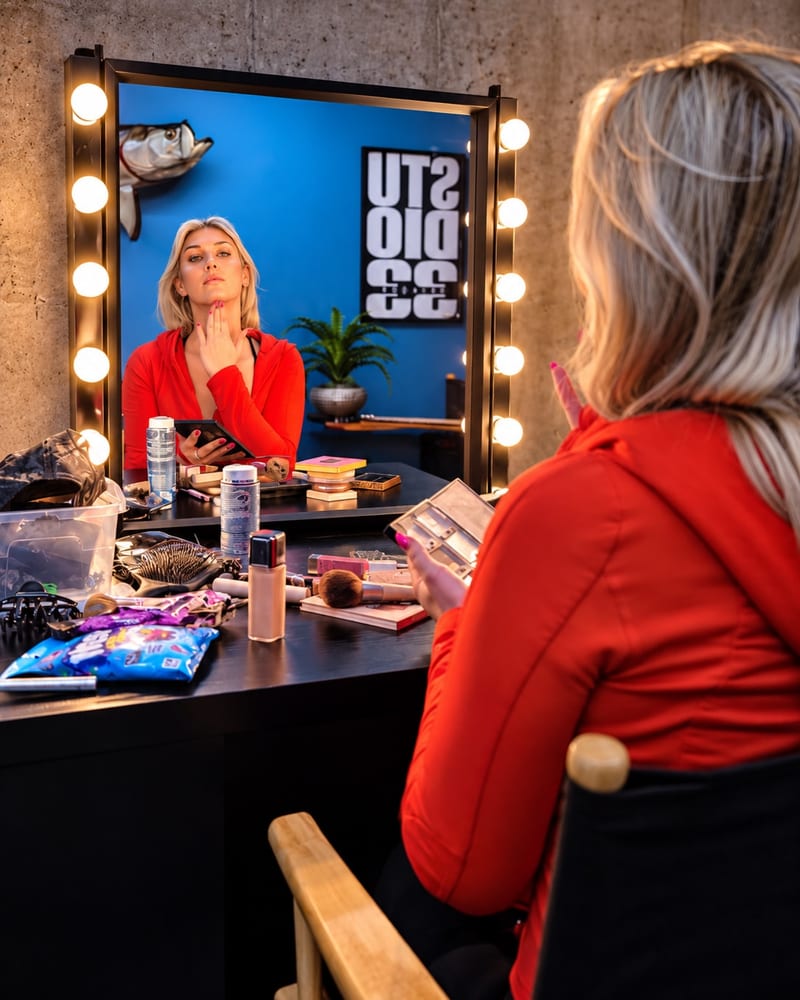
Studio 33 has a private green room with two vanity stations, a large sofa, a wardrobe rack, a privacy divider, and device chargers. During a production it can provide a separate area for wardrobe organization, subject preparation, accessories, waiting between setups, and keeping personal items away from the primary shooting area.
Makeup artists, stylists, and wardrobe professionals are not included as part of the rental. The green room provides the space. The production team brings the people and materials their project requires.

Building the First Camera Angle
Back in the main studio, one of the first creative decisions is where the camera sees the space from.
A photographer or videographer may consider subject position, camera distance, background, intended crop, horizontal versus vertical composition, full-body versus tighter framing, and whether the image needs space for text or graphics. The physical studio may remain exactly the same while camera position dramatically changes what the audience eventually sees.
This is worth understanding for anyone who has not spent time on a production set. The final frame represents only a small portion of what is actually happening in the room. Light stands, cables, equipment, crew, and production materials may surround the subject on all sides. None of that appears in the finished image.
Lighting Turns the Blank Space Into a Set
Lighting is where the white production environment begins to take on a specific visual character.
Studio 33 has a professional ceiling lighting grid that provides flexible overhead lighting positions. A production team may build its lighting based on the subject, the product, the camera angle, the desired mood, and whether the session involves still photography, video, or both. There is no single correct approach. The lighting setup depends on what the production is trying to achieve.
The Same White Cyc Can Look Completely Different
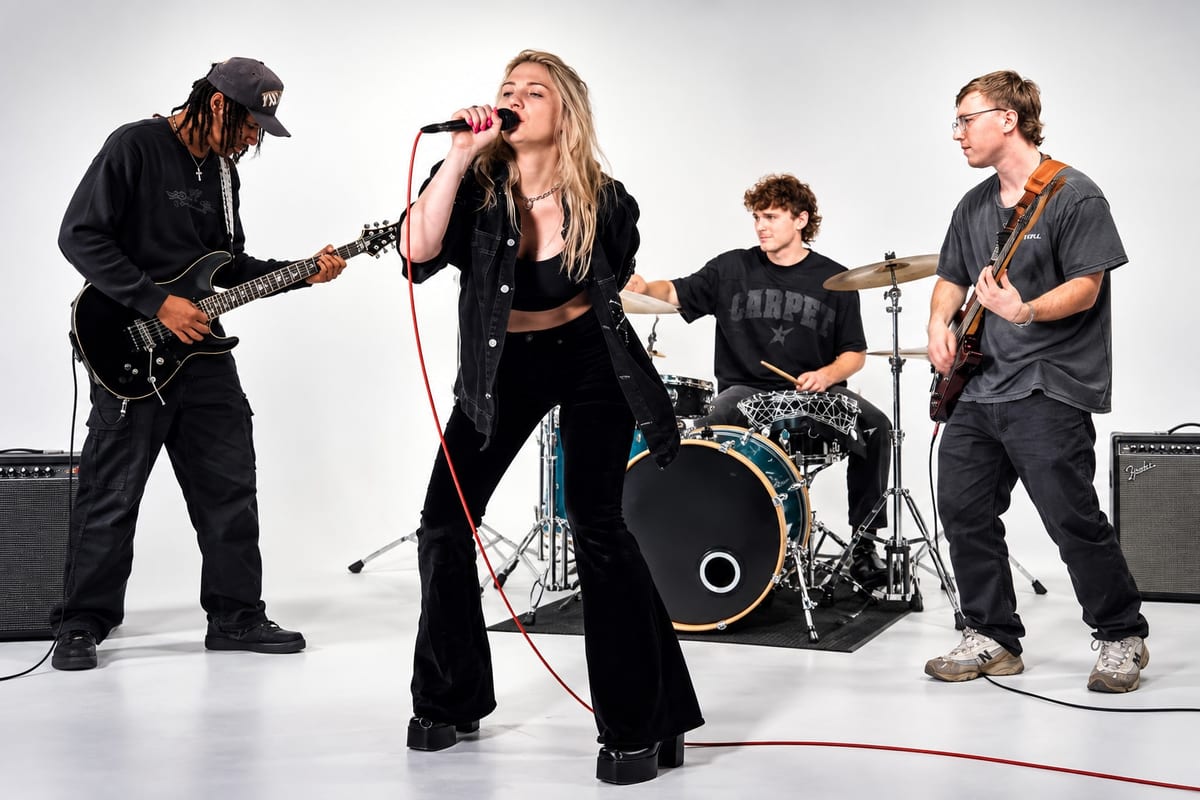
A white cyclorama does not necessarily need to remain visually white.
The appearance depends heavily on lighting. One production might use the cyc as a bright white environment. Another might use it as a softer neutral background. A third might push it toward something more dramatic. The physical surface is the same in each case. What changes is how the production team chooses to light it.
Camera settings, subject position, exposure, and other production decisions all influence the final result. The cyc is a starting point, not a finished background.
Adding RGB Color
Studio 33 has three RGB panels positioned on the ceiling lighting grid and one additional RGB panel on a C-stand.
RGB lighting can potentially introduce single-color backgrounds, color gradients, contrasting colors, brand-inspired colors, edge lighting, and visual separation between the subject and the environment. This can allow a production to create a dramatically different visual direction without physically moving to another location.
Changing the light color does not instantly create a finished new setup. Other lighting adjustments, camera settings, and production decisions may still be necessary. But the visual shift can be significant.
For creative lighting concepts, see RGB Lighting Ideas for Portrait Photography and the RGB lighting studio page.
Testing Happens Before the Finished Shot
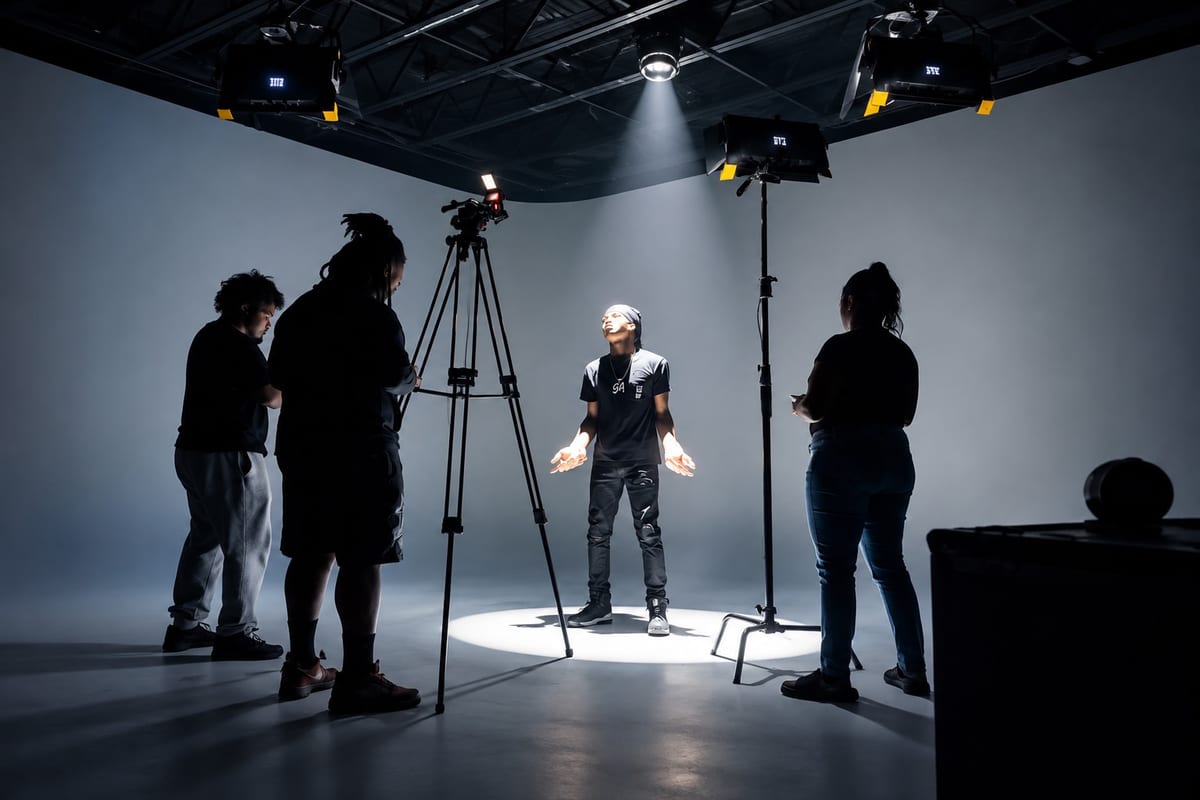
Professional-looking finished images often come after testing.
A production team may evaluate camera framing, exposure, lighting, background appearance, wardrobe, product position, reflections, audio for video, and overall composition before capturing the material that actually matters. Test frames are not wasted time. They allow adjustments to happen before the important work begins.
The difference between a production that tests carefully and one that does not often shows up in the finished result.
Then the Frame Gets Smaller
Behind the scenes, the studio may contain light stands, cables, equipment, crew, wardrobe, products, computers, and production materials. But the camera might see only subject, background, and light.
Much of studio production is deciding what belongs inside the frame and what stays outside it. A behind-the-scenes photograph of an active production often looks nothing like the finished image. The BTS image shows the full room. The finished image shows only what the photographer chose to include.
This is one of the major differences between watching a production happen and seeing the final result.
One Setup Can Become Several Compositions
A production may capture multiple compositions before completely changing the set.
Depending on the project, a tight portrait, a waist-up image, a full-body image, a horizontal composition, a vertical composition, and an image with negative space for text may potentially be created from a related setup. Planning deliverables beforehand helps the photographer know which versions are actually needed before the lighting gets changed or the wardrobe gets swapped.
For guidance on planning content across multiple formats, see How to Plan a Content Creation Day or How to Plan a Personal Branding Photoshoot.
Changing the Look Without Changing the Studio
Visual variety can come from changing camera angle, subject position, wardrobe, lighting, RGB color, props, products, and composition.
The physical location remains Studio 33. The resulting images can have different visual characteristics. A production that plans for multiple looks in advance can use the same studio environment to build a range of content rather than a single visual approach.
This is not a claim that the studio can become anything. It is a practical observation about how production decisions shape the final result.
Photography Can Transition Into Video
Some productions may intentionally capture both still photography and video.
After photographing a subject or product, a production team may reconfigure or adapt the setup for talking-head video, interview content, product demonstrations, social clips, B-roll, or branded video. Studio 33 provides a physical environment suitable for both photography and video production. The necessary videographer, camera, audio equipment, and production crew are not included.
For spoken video, Studio 33 is not described as soundproof. Production teams with specific audio requirements should evaluate the environment for their needs and bring the appropriate recording equipment.
For a broader guide to planning video content, see How to Create Professional Video Content for Your Business. For productions specifically using the cyclorama for interviews, commercials, or branded video, see Cyclorama Wall Video Production: How to Use a Cyc for Interviews, Commercials and Branded Content.

Capturing the Behind-the-Scenes Story
During an actual production, teams may choose to document the setup, lighting, camera position, wardrobe preparation, product preparation, and production activity.
BTS content creates another perspective on the production process. It can show how the final work was created and give audiences a view of the environment that the finished image deliberately excludes. This is part of why Studio 33 uses real production photography throughout this article rather than staged or fabricated images. For a broader look at how different types of creators use Studio 33 for photo and video work, see Behind the Scenes: How Creators Use a Professional Photo & Video Studio.
The Finished Image Is Only Half the Story
When someone sees a polished portrait, product photograph, or video frame, they rarely see the planning, setup, testing, lighting adjustments, wardrobe changes, background decisions, equipment, or breakdown that preceded it.
That hidden work is part of the production. A dedicated studio does not create the finished result automatically. It provides an environment where the photographer, videographer, or production team can build the setup required for their project. The distinction matters. The studio is the space. The production is what the team brings to it.
Then Everything Comes Back Down
At the end of a production, equipment is packed, wardrobe is collected, products are organized, props are removed, production materials are gathered, and equipment is loaded out.
The cyclorama returns to being a relatively blank production environment. The studio looks much the same as it did at the beginning of the day.
What happened in between is the production.
Behind the Scenes at Studio 33 Chicago
Studio 33 Chicago is located at 33 N. Addison Rd. in Addison, Illinois. The studio provides a professional photo, video, and content production environment serving photographers, videographers, creators, businesses, brands, agencies, and production teams throughout Chicago and the surrounding western and northwestern suburbs.
The studio includes:
- 14' x 14' white cyclorama wall
- Professional ceiling lighting grid
- RGB lighting (three ceiling-grid panels and one C-stand panel)
- Private green room with two vanity stations, sofa, wardrobe rack, privacy divider, and device chargers
- High-speed Wi-Fi
- Climate-controlled studio
- Men's and women's restrooms
- Free on-site parking
- Sandbags and apple boxes
Studio rental starts at $105 per hour. Current minimum booking requirements are a 2-hour minimum for Monday through Friday daytime sessions and a 3-hour minimum for evenings and weekends. Check current booking information for pricing, availability, and any optional services or add-ons.
The rental provides the physical environment. Photographers, videographers, cameras, microphones, editing, retouching, and finished content are not included. For a full overview of the studio environment, see Studio 33 amenities.
Frequently Asked Questions About Studio Productions
What happens during a professional studio photoshoot?
Every production is different, but a studio shoot may include load-in, camera setup, lighting, subject or product preparation, test images, photography or video, setup changes, and breakdown. The specific workflow depends on the project, the production team, and what the shoot requires.
What is a cyclorama wall used for?
A cyclorama wall uses a curved wall-to-floor transition to create a more seamless visual background from many camera angles. It can be used for portrait photography, product photography, video production, and other studio productions.
Can the Studio 33 cyclorama wall be used with colored lighting?
Yes. Studio 33 has RGB lighting that can introduce color into the studio environment. The final appearance depends on lighting, camera settings, and other production choices.
Can Studio 33 be used for both photography and video?
Yes. Studio 33 provides a physical production environment suitable for both photography and video. Specialized equipment and production professionals are not included as part of the rental.
Does Studio 33 provide a photographer or videographer?
Studio 33 is primarily a studio rental space. Renters should arrange the appropriate creative professionals and specialized equipment for their production unless current booking information explicitly states otherwise.
Where is Studio 33 Chicago located?
Studio 33 Chicago is located at 33 N. Addison Rd. in Addison, Illinois, serving Chicago and the surrounding western and northwestern suburbs.
From Blank Space to Finished Frame
At the beginning of a production, the cyclorama is essentially a blank white environment.
What happens next depends on the concept, the photographer or videographer, the subject, the product, the lighting, the camera, and the production plan. Studio 33 provides the physical space where those pieces can come together.
For anyone interested in seeing the studio or planning a production, explore the Studio Gallery, photo studio rental, video studio rental, cyclorama wall, RGB lighting, green room, and content creator studio pages, or check current rental availability.